
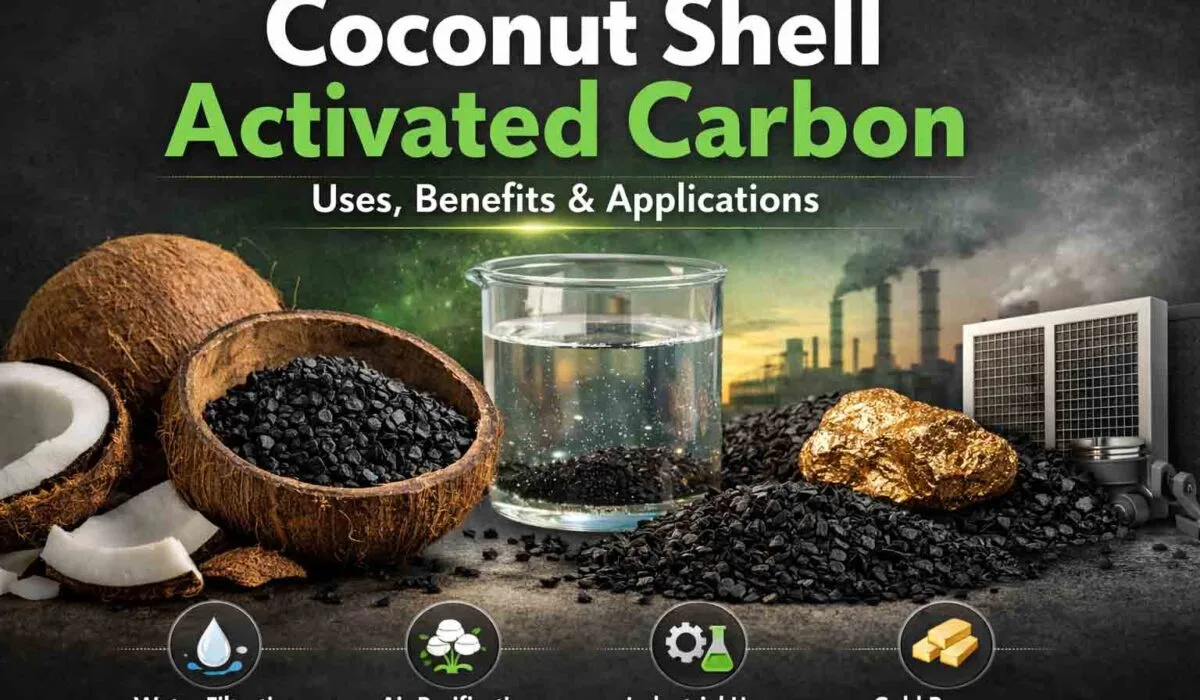
Coconut Shell Activated Carbon: The Ultimate Guide to Properties, Uses & Applications
Coconut shell activated carbon is one of the most widely used and highest-performing adsorption media in the world. Known for its high surface area, microporous structure, and exceptional adsorption capacity, coconut shell activated carbon plays a critical role in water purification, air filtration, industrial treatment, and environmental protection.
This detailed guide explains what coconut shell activated carbon is, how it is made, its properties, specifications, applications, and why it outperforms coal-based and wood-based activated carbon in most filtration systems.
What Is Coconut Shell Activated Carbon?
Coconut shell activated carbon (also called coconut shell activated charcoal or CSAC) is a high-purity carbon adsorbent produced from coconut shells, a renewable biomass resource. Through carbonization and activation, the shell is converted into a highly porous material capable of adsorbing contaminants at the molecular level.
Unlike other activated carbons, coconut shell carbon is predominantly microporous, making it extremely effective for adsorbing chlorine, organic compounds, VOCs, odors, color, taste, and trace contaminants.
Why Coconut Shell Is the Best Raw Material for Activated Carbon
Coconut shells are considered the ideal precursor for activated carbon production due to:
Very high carbon content
Low ash formation
Exceptional hardness and abrasion resistance
Natural microporous structure
Renewable and eco-friendly origin
These characteristics result in longer service life, lower dust, and higher adsorption efficiency compared to coal-based activated carbon.
Manufacturing Process of Coconut Shell Activated Carbon
The production process directly affects performance and quality.
1. Carbonization
Coconut shells are heated in a controlled, oxygen-limited environment to remove volatile matter and convert them into char.
2. Activation
The char is activated using steam or physical activation, which:
Develops micropores
Increases surface area
Enhances adsorption capacity
This process creates high surface area activated carbon, often exceeding 900–1200 m²/g.
Key Properties of Coconut Shell Activated Carbon
Microporous structure (ideal for small molecules)
High iodine number
Low ash content
High hardness number
Low dust generation
High adsorption capacity
Excellent mechanical strength
These properties make it suitable for both liquid phase and gas phase applications.
Technical Specifications (Typical)
| Parameter | Typical Range |
|---|---|
| Iodine Value | 900 – 1200 mg/g |
| Surface Area (BET) | 900 – 1300 m²/g |
| Moisture Content | ≤ 5% |
| Ash Content | ≤ 5% |
| Bulk Density | 450 – 550 kg/m³ |
| Hardness | > 95% |
| Porosity | Predominantly microporous |
Available Grades & Mesh Sizes
Coconut shell activated carbon is available in multiple forms:
Granular Activated Carbon (GAC)
4×6 mesh
6×12 mesh
8×30 mesh
12×40 mesh
Powdered Activated Carbon (PAC)
80 mesh
200 mesh
325 mesh
Pelletized Activated Carbon
Used mainly for air and gas purification
Applications of Coconut Shell Activated Carbon
1. Water Purification & Treatment
Coconut shell activated carbon is widely used in:
Drinking water treatment
Industrial water filtration
RO pre-treatment systems
Groundwater purification
Municipal water treatment plants
It effectively removes:
Chlorine and chloramines
Organic contaminants
Taste and odor compounds
Color-causing substances
Trace pesticides and VOCs
2. Air & Gas Purification
Due to its microporous nature, it is highly effective in:
Air purification systems
Odor removal units
Gas phase adsorption
VOC removal
Industrial exhaust treatment
3. Food & Beverage Industry
Used for:
Beverage filtration
Sugar decolorization
Edible oil purification
Alcohol and spirit filtration
Its low ash and high purity make it safe for food-grade applications.
4. Pharmaceutical & Chemical Industry
Solvent recovery
API purification
Chemical decolorization
Catalyst support media
5. Gold Recovery & Precious Metals
Coconut shell activated carbon is preferred in gold recovery (CIP / CIL processes) due to:
High hardness
Excellent gold adsorption
Low attrition loss
Coconut Shell Activated Carbon vs Coal-Based Activated Carbon
| Parameter | Coconut Shell | Coal-Based |
|---|---|---|
| Pore Structure | Microporous | Meso + Macro |
| Ash Content | Low | Higher |
| Hardness | Very High | Moderate |
| Dust Generation | Low | Higher |
| Sustainability | Renewable | Non-renewable |
| Water Taste & Odor Removal | Excellent | Moderate |
Environmental & Sustainability Benefits
Made from renewable coconut shells
Low carbon footprint
Biodegradable source material
Eco-friendly activated carbon
Supports circular economy
How to Choose the Right Coconut Shell Activated Carbon
Consider:
Application (water, air, chemical)
Required iodine number
Mesh size
Contact time
Contaminant type
Regulatory standards
Proper selection ensures maximum adsorption efficiency and longer media life.
Why Coconut Shell Activated Carbon Is the Preferred Filtration Media
With rising concerns over water quality, air pollution, and industrial waste, coconut shell activated carbon has become the gold standard adsorption media worldwide. Its superior performance, sustainability, and versatility make it the first choice across industries.
Final Thoughts
Coconut shell activated carbon is not just a filtration media—it is a critical component of modern purification systems. Whether used in water treatment, air purification, industrial processing, or environmental protection, its performance remains unmatched.
Choosing a high-quality coconut shell activated carbon supplier ensures better results, lower operating costs, and consistent filtration performance.