
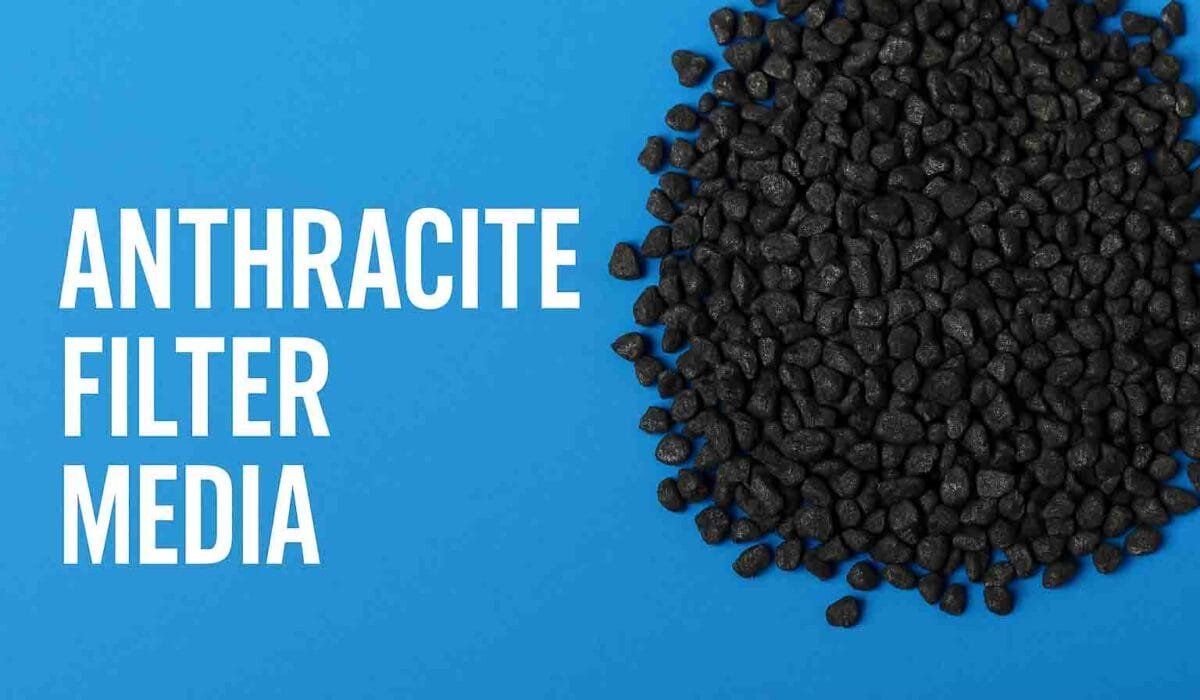
When we think about water filtration, materials like sand, gravel, or activated carbon often come to mind. Yet, one powerful natural medium quietly delivers high efficiency and long-term reliability Anthracite Filter Media. Known for its high carbon content, low ash, and unique particle shape, anthracite filter media has become a cornerstone in drinking water, wastewater, and industrial filtration systems worldwide.
In this article, we’ll explore the composition, advantages, technical properties, and global applications of anthracite filter media and why it’s considered one of the most efficient filtration materials available today.
1. What Is Anthracite Filter Media?
Anthracite filter media is a granular filtration material derived from high-grade anthracite coal. It is carefully processed through crushing, washing, and screening to achieve the desired effective size (ES) and uniformity coefficient (UC).
Unlike sand or quartz media, anthracite particles have a sharp, angular structure, allowing for deeper penetration of suspended solids and higher filtration capacity.
Key Composition:
Fixed Carbon: >85%
Ash Content: <8%
Moisture Content: <2%
Volatile Matter: <5%
Bulk Density: 800–900 kg/m³
Hardness: 3–3.5 (Mohs scale)
These physical and chemical properties make anthracite ideal for multi-media filters, dual media filters, and rapid gravity filtration systems.
2. Why Choose Anthracite Filter Media for Water Treatment?
a. Superior Filtration Efficiency
Because of its irregular grain shape and low specific gravity, anthracite creates larger pore spaces in the filter bed. This allows greater solids loading and longer filter runs compared to traditional sand filters.
b. Excellent Turbidity Removal
Anthracite effectively removes suspended solids, organic matter, and turbidity in both drinking water and wastewater applications. It can trap fine particles while maintaining low head loss.
c. Low Pressure Drop & Backwash Requirement
Its lightweight structure allows efficient backwashing at lower velocities, resulting in reduced backwash water consumption and operational cost savings.
d. High Mechanical Strength
Anthracite media is chemically inert, abrasion-resistant, and stable under varying pH and temperature conditions, ensuring long-term durability.
e. Longer Service Life
With proper maintenance, anthracite filter media can last 5–10 years, outperforming sand or other filter materials in longevity and performance.
3. How Anthracite Filter Media Works in a Filtration System
In a dual media filter, anthracite is typically used as the top layer, above silica sand. Because anthracite is lighter (lower density) than sand, it naturally settles on top during backwashing.
Process Flow:
Raw water enters from the top.
Larger suspended particles are trapped in the anthracite layer.
Finer impurities are caught in the sand layer below.
Clean water exits through the underdrain system.
This combination creates an effective gradient filtration, providing deeper bed penetration, lower head loss, and higher filtration rates.
4. Typical Sizes and Grades of Anthracite Filter Media
Starke’s anthracite filter media is available in multiple size ranges to suit different systems and applications:
| Mesh Size | Particle Size (mm) | Application |
|---|---|---|
| 8–16 Mesh | 1.18 – 2.36 mm | Dual Media Filters |
| 12–25 Mesh | 0.6 – 1.7 mm | Multi-Media Filters |
| 16–30 Mesh | 0.5 – 1.2 mm | Pressure Sand Filters |
| 20–40 Mesh | 0.4 – 0.8 mm | Fine Filtration |
| 2–4 mm | Coarse Filtration / Pretreatment | |
| Custom Sizes | On Request | OEM and Project-Specific Needs |
Each grade undergoes sieve analysis testing to ensure the effective size (ES) and uniformity coefficient (UC ≤ 1.7) meet the AWWA B100 and EN 12909 standards.
5. Applications of Anthracite Filter Media
Anthracite is one of the most versatile materials in the filtration industry. Its uses extend far beyond municipal treatment plants.
a. Drinking Water Treatment Plants (WTPs)
Removes turbidity, color, and suspended solids.
Used in dual media filters and rapid gravity filters.
b. Wastewater Treatment Plants (STPs & ETPs)
Applied in tertiary polishing units for achieving low turbidity levels.
Used in industrial wastewater from textile, steel, and chemical sectors.
c. Desalination and RO Pretreatment
Enhances feed water quality by reducing turbidity before RO membranes.
Common in seawater filtration systems for SWRO plants.
d. Power Plants & Cooling Towers
Used for cooling water filtration and circulating water systems to maintain clarity and prevent fouling.
e. Swimming Pools & Aquaculture
Acts as a natural, reusable, and low-maintenance filtration layer.
Ensures safe and clear water in recreational and fish-farming systems.
6. Advantages of Anthracite Filter Media Over Other Materials
| Parameter | Anthracite | Silica Sand | Garnet / Gravel |
|---|---|---|---|
| Density | 0.8–0.9 g/cm³ | 1.5–1.6 g/cm³ | 3.8–4.2 g/cm³ |
| Filtration Depth | Deep bed | Shallow | Shallow |
| Flow Rate | Higher | Moderate | Low |
| Backwash Requirement | Lower | Moderate | High |
| Service Life | Long | Medium | Medium |
| Heat/Acid Resistance | Excellent | Good | Excellent |
This comparison shows why anthracite filter media is increasingly replacing sand-only beds, especially in industrial and municipal water treatment plants.
7. Technical Parameters of High-Quality Anthracite Filter Media
| Property | Value |
|---|---|
| Bulk Density | 800–900 kg/m³ |
| Effective Size (ES) | 0.6–2.3 mm |
| Uniformity Coefficient (UC) | ≤1.7 |
| Hardness | Mohs 3–3.5 |
| Fixed Carbon | ≥85% |
| Ash Content | ≤5% |
| Moisture | ≤2% |
| Volatile Matter | ≤5% |
| Porosity | 45–55% |
| pH | Neutral |
| Chemical Resistance | Excellent (acids, alkalis) |
Starke ensures every batch undergoes quality testing for moisture, density, and grain uniformity before dispatch meeting both AWWA B100 and EN 12909 certifications.
8. Common Filter Configurations Using Anthracite
Dual Media Filter (Anthracite + Sand) – used for municipal and industrial filtration.
Multi-Media Filter (Anthracite + Sand + Garnet) – used for high-turbidity or seawater applications.
Pressure Sand Filter Replacement – upgrading sand-only systems to improve performance.
Gravity Filtration Beds – for large-capacity flow systems in WTPs and STPs.
9. Maintenance & Operational Tips
To ensure maximum life and performance of anthracite filter media:
Maintain bed depth of 24–36 inches depending on design.
Perform backwash at 40–50 m³/m²/hr.
Inspect head loss and backwash frequency every 3–6 months.
Replace or top-up the media after 5 years or when performance declines.
Use only clean, washed anthracite for replacement to avoid contamination.
10. Global Standards and Certifications
Starke’s anthracite filter media complies with:
AWWA B100 – for granular filter media.
EN 12909 – for water treatment media.
ISO 9001:2015 – quality management systems.
ASTM C127/C128 – density and absorption testing.
These standards ensure that the media performs consistently in drinking water, industrial, and desalination applications across global projects.
11. Why Starke Anthracite Filter Media Is Preferred Worldwide
With nearly two decades of experience in filtration materials, Starke Aquacare Technologies has established itself as a trusted supplier and exporter of anthracite filter media.
Key Advantages:
Sourced from premium high-carbon anthracite coal.
Processed with automated screening and dust removal systems.
Packaged in 25 kg bags or 1-ton jumbo bags.
Available in custom sizes for OEM and EPC clients.
Proven track record in power plants, desalination units, and municipal WTPs.
Export presence in Middle East, Africa, Europe, and South America.
Each shipment is accompanied by Certificate of Analysis (COA) and MSDS, assuring clients of consistent quality and compliance.
12. Anthracite Filter Media: Sustainable and Eco-Friendly Choice
Because it is a natural carbon-based mineral, anthracite has a smaller environmental footprint compared to synthetic filtration materials. It is:
Reusable after washing and backwashing cycles.
Non-toxic and chemically stable.
Recyclable after service life.
This makes it an excellent choice for organizations pursuing sustainable water treatment solutions.
13. Real-World Use Cases
Municipal WTPs: Used as the top layer in large-scale filters in India, Oman, and Saudi Arabia.
Desalination Plants: Deployed in RO pretreatment filters for seawater desalination.
Industrial Clients: Common in textile, food & beverage, power, and chemical sectors.
Swimming Pools and Aquaculture: Ensures clean, clear water without chemical contamination.
14. Cost and Availability
The cost of anthracite filter media depends on:
Grain size (0.6-1.2 mm common)
Fixed carbon purity
Packaging type (25 kg or 1-ton bag)
Shipping destination
Starke ensures competitive pricing while maintaining the highest quality standards, making it an ideal partner for bulk buyers and distributors.
15. Conclusion
Anthracite Filter Media plays a vital role in achieving high-quality, efficient, and sustainable water filtration. With its high carbon content, durability, and deep-bed filtration ability, it outperforms conventional sand in most industrial and municipal systems.
When combined with other layers like silica sand and garnet, anthracite enables multi-media filters to deliver superior results ensuring cleaner water, reduced maintenance, and longer filter life.
At Starke Aquacare Technologies, we supply anthracite filter media in various mesh sizes suitable for dual media filters, pressure sand filters, multi-media filters, and industrial filtration units.
You can purchase high-quality anthracite filter media in different sizes and grades from Starke Aquacare Technologies, a trusted global supplier of filtration and water treatment media since 2005.
🌐 www.starkefiltermedia.com | ✉️ sales@starkefiltermedia.com