

Introduction
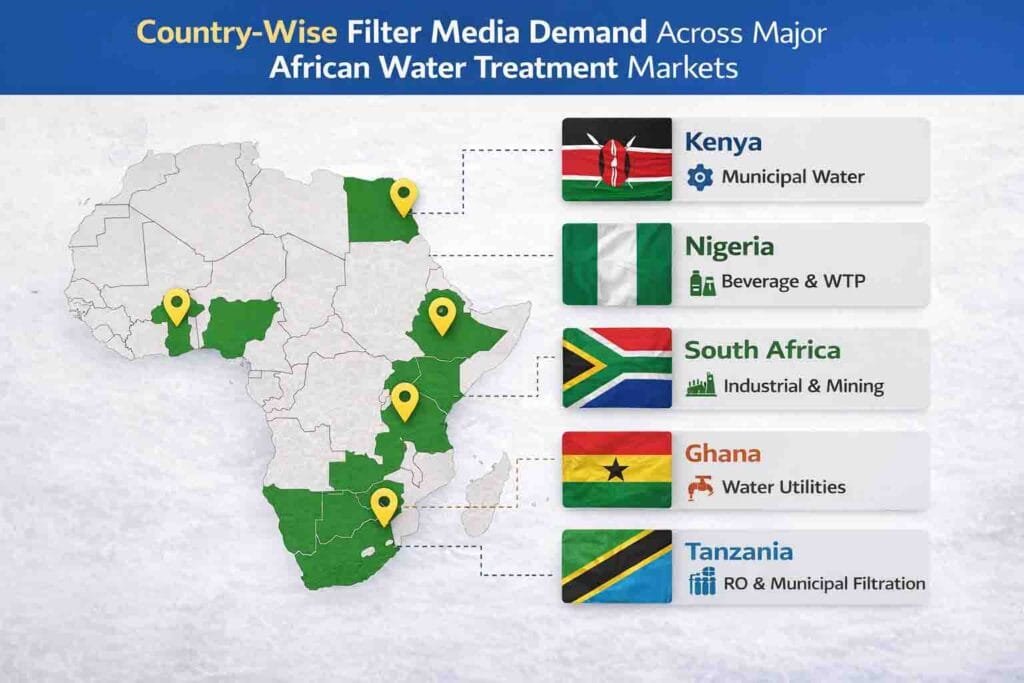
Water treatment infrastructure across Africa has expanded rapidly over the last decade. Countries such as Kenya, Nigeria, South Africa, Ghana, and Tanzania are investing heavily in drinking water treatment plants, desalination facilities, industrial filtration systems, and municipal water infrastructure.
One of the most critical components in these systems is filter media, which removes suspended solids, turbidity, and particulate contaminants from water. Filtration systems typically use granular materials such as silica sand, anthracite, and garnet to achieve effective depth filtration.
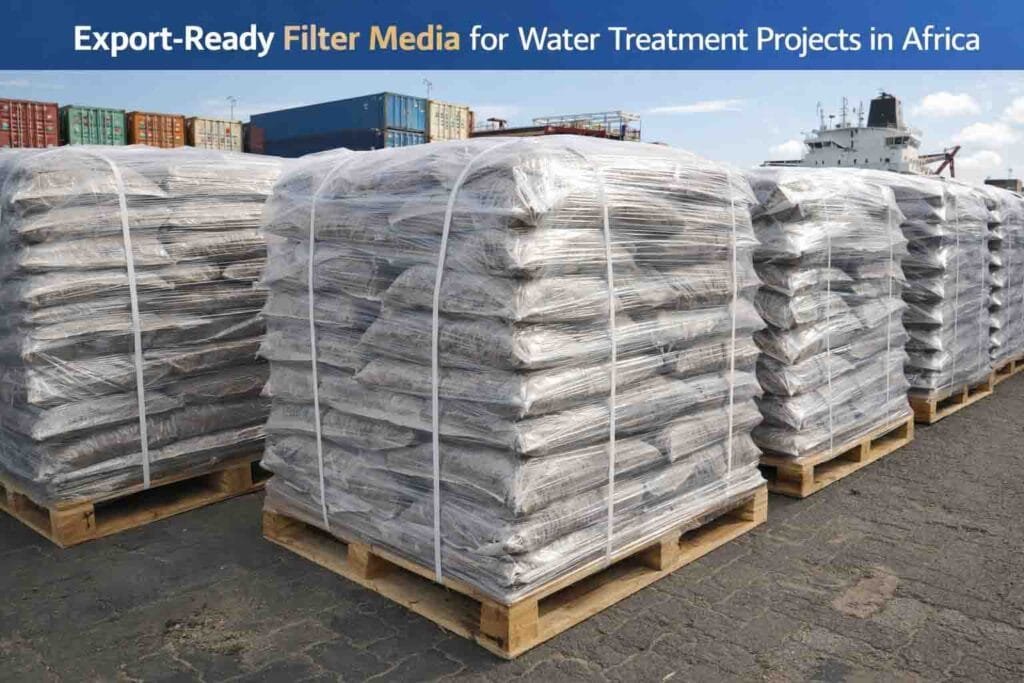
As the demand for clean water increases across the continent, engineering companies and water utilities are actively searching for reliable filter media suppliers in Africa who can provide consistent quality filtration materials.
Whether it is for municipal drinking water plants, reverse osmosis pretreatment, or industrial filtration systems, selecting the right filter media supplier is essential for maintaining filtration performance and ensuring long-term operational stability.
In this guide, we explain the role of filter media in water treatment systems, the most commonly used filtration materials, and where water treatment companies in Africa can source high-quality filter media for their projects.
What is Filter Media in Water Treatment?
Filter media refers to granular materials used in water filtration systems to remove suspended solids, turbidity, and particulate matter. These materials form the filtration bed inside pressure vessels or gravity filters.
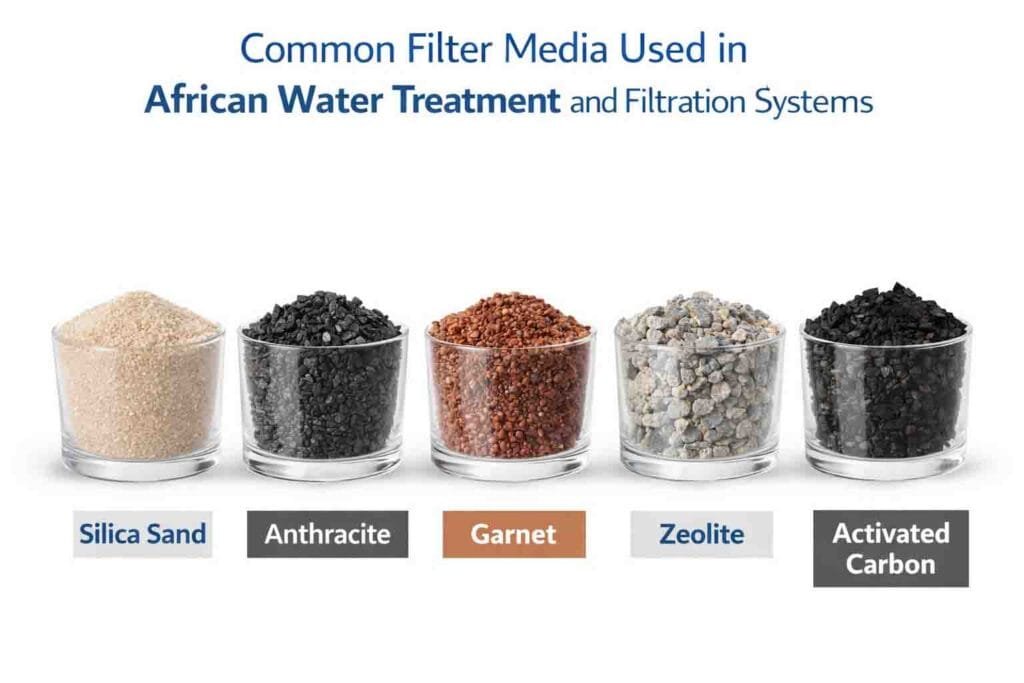
The most commonly used filtration media include:
Silica sand filter media
Anthracite filter media
Garnet filter media
Zeolite filtration media
Activated carbon filtration media
Each type of media has specific physical properties such as particle size, density, hardness, and filtration characteristics.
In most water treatment plants, filtration is achieved through multimedia filters. These filters contain multiple layers of media arranged according to density and particle size. Larger and lighter media remain on top while smaller and heavier media settle at the bottom.
This layered configuration allows the filter bed to remove particles throughout the entire depth of the filter, increasing efficiency and solids holding capacity.
Why Filter Media is Used in Water Treatment Plants
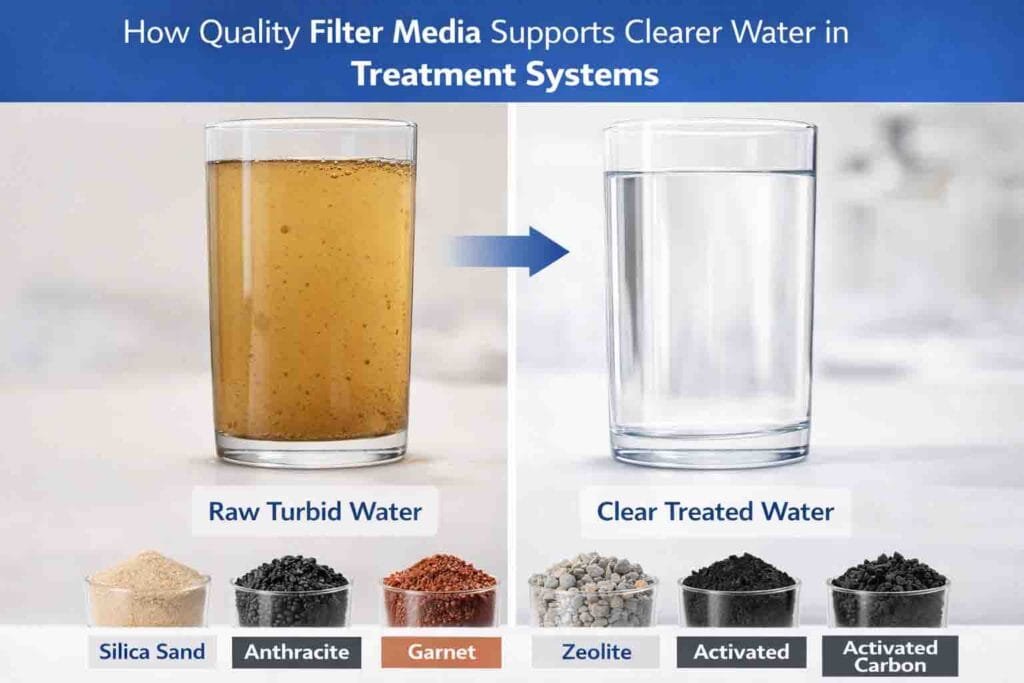
Filtration is a fundamental step in water treatment processes. Without proper filtration, suspended solids can damage downstream equipment, reduce treatment efficiency, and compromise water quality.
Filter media is used in water treatment plants for several reasons.
Removal of Suspended Solids
Granular filter media capture particles such as silt, algae, rust, and organic debris.
Turbidity Reduction
Filtration significantly reduces turbidity levels in raw water sources.
Protection of Downstream Processes
Pretreatment filtration protects sensitive equipment such as reverse osmosis membranes.
Improved Water Quality
Filtration helps produce water that meets drinking water and industrial standards.
Increased System Reliability
Proper filtration reduces maintenance requirements and improves plant efficiency.
Because of these benefits, filtration systems using sand, anthracite, and garnet media are widely used in municipal and industrial water treatment plants across Africa.
Technical Specifications of Common Filter Media
Selecting the correct filter media requires understanding several important technical parameters.
Silica Sand Filter Media
Silica sand is the most widely used filtration media in water treatment systems.
Typical specifications:
Effective size: 0.5 – 1.0 mm
Uniformity coefficient: ≤ 1.7
Silica content: ≥ 96%
Specific gravity: ~2.65
Sand filters provide reliable turbidity removal and are commonly used in drinking water plants.
Anthracite Filter Media
Anthracite is a high-carbon filtration media used in multimedia filters.
Typical specifications:
Effective size: 0.8 – 1.6 mm
Uniformity coefficient: ≤ 1.5
Carbon content: ≥ 85%
Specific gravity: ~1.6
Anthracite is placed on top of sand layers because of its lower density and larger particle size.
Garnet Filter Media
Garnet is a dense mineral used in the bottom layer of multimedia filters.
Typical specifications:
Effective size: 0.3 – 0.6 mm
Uniformity coefficient: ≤ 1.5
Specific gravity: ~4.0
Hardness: 7.5 – 8 Mohs
Garnet provides fine particle filtration and improves overall filter performance.
How Filter Media Filtration Works
Water filtration using granular filter media relies on several physical mechanisms.
Mechanical Straining
Larger particles are trapped between media grains as water flows through the filter bed.
Interception
Particles moving with water flow collide with filter media surfaces and become attached.
Sedimentation
Heavier particles settle within the void spaces between media particles.
Depth Filtration
Particles are captured throughout the entire depth of the filter bed rather than only on the surface.
As contaminants accumulate in the filter bed, the filtration resistance increases. At this stage, the filter must be cleaned through backwashing, where water flows upward through the bed to remove trapped solids.
Applications of Filter Media in Africa
Water treatment plants across Africa use filter media in a wide range of applications.
Municipal Drinking Water Plants
Cities rely on filtration systems to remove turbidity and suspended solids from surface water sources.
Reverse Osmosis Pretreatment
Filtration removes suspended particles before water enters RO membranes.
Industrial Water Treatment
Industries such as power plants, food processing, and manufacturing require filtration for process water.
Desalination Plants
Coastal desalination plants use filtration as pretreatment before seawater enters membrane systems.
Wastewater Reuse
Filtration helps remove suspended solids in tertiary wastewater treatment processes.
Comparison with Other Filtration Systems
Different filtration technologies are used in water treatment plants.
Sand Filters
Single-media sand filters are simple and reliable but have lower solids holding capacity.
Multimedia Filters
Multimedia filters using sand, anthracite, and garnet provide higher filtration efficiency.
Cartridge Filters
Cartridge filters provide fine filtration but require frequent replacement.
Membrane Filtration
Ultrafiltration and microfiltration systems provide higher removal efficiency but involve higher costs.
For most municipal and industrial water treatment plants in Africa, multimedia filtration provides the best balance between efficiency and cost.
Advantages of High-Quality Filter Media
Selecting high-quality filter media offers several benefits.
Improved Filtration Efficiency
Uniform particle size distribution improves contaminant removal.
Longer Filter Run Time
Multimedia filters allow longer operation before backwashing.
Reduced Operating Costs
Lower maintenance requirements reduce operating expenses.
Protection of Downstream Equipment
Effective pretreatment protects membranes and other treatment equipment.
Higher Solids Loading Capacity
Multimedia filters can handle higher turbidity levels compared to single-media filters.
Common Mistakes When Purchasing Filter Media
Many water treatment projects face filtration problems due to poor media selection.
Incorrect Media Size
Improper particle size can reduce filtration efficiency.
High Uniformity Coefficient
Poorly graded media may lead to channeling.
Low Purity Materials
Impurities in filter media can contaminate treated water.
Poor Quality Control
Lack of proper sieve analysis testing can lead to inconsistent performance.
Working with experienced suppliers helps ensure the filter media meets required industry standards.
Filter Media Supplier Kenya
Water treatment projects in Kenya frequently require sand, anthracite, and garnet filter media for municipal water plants and industrial filtration systems. Engineering companies in Kenya typically source filter media for drinking water treatment plants, RO pretreatment systems, and infrastructure projects.
Filter Media Supplier Nigeria
Nigeria has one of the largest water treatment markets in Africa. Municipal utilities, beverage plants, and industrial filtration systems rely on high-quality filter media to maintain consistent water quality.
Filter Media Supplier South Africa
South Africa has advanced water treatment infrastructure and requires filtration media for municipal water plants, desalination systems, and mining industry filtration applications.
FAQs
What is the most common filter media used in Africa?
Silica sand is the most widely used filtration media for water treatment plants.
Why is anthracite used in multimedia filters?
Anthracite provides coarse filtration and improves solids holding capacity.
What is the purpose of garnet in filtration?
Garnet provides fine particle filtration due to its high density.
What turbidity level can multimedia filters remove?
Properly designed multimedia filters can reduce turbidity below 1 NTU.
How often should filters be backwashed?
Most multimedia filters require backwashing every 24–72 hours depending on water quality.
Conclusion
The demand for reliable water treatment infrastructure across Africa continues to grow as governments and industries invest in sustainable water supply systems. Filtration systems using sand, anthracite, and garnet remain one of the most effective and economical solutions for removing suspended solids and improving water quality.
Selecting high-quality filter media and working with experienced suppliers ensures consistent filtration performance and long-term system reliability. From municipal water treatment plants to industrial filtration systems, properly graded filter media plays a crucial role in delivering safe and clean water across the continent.