
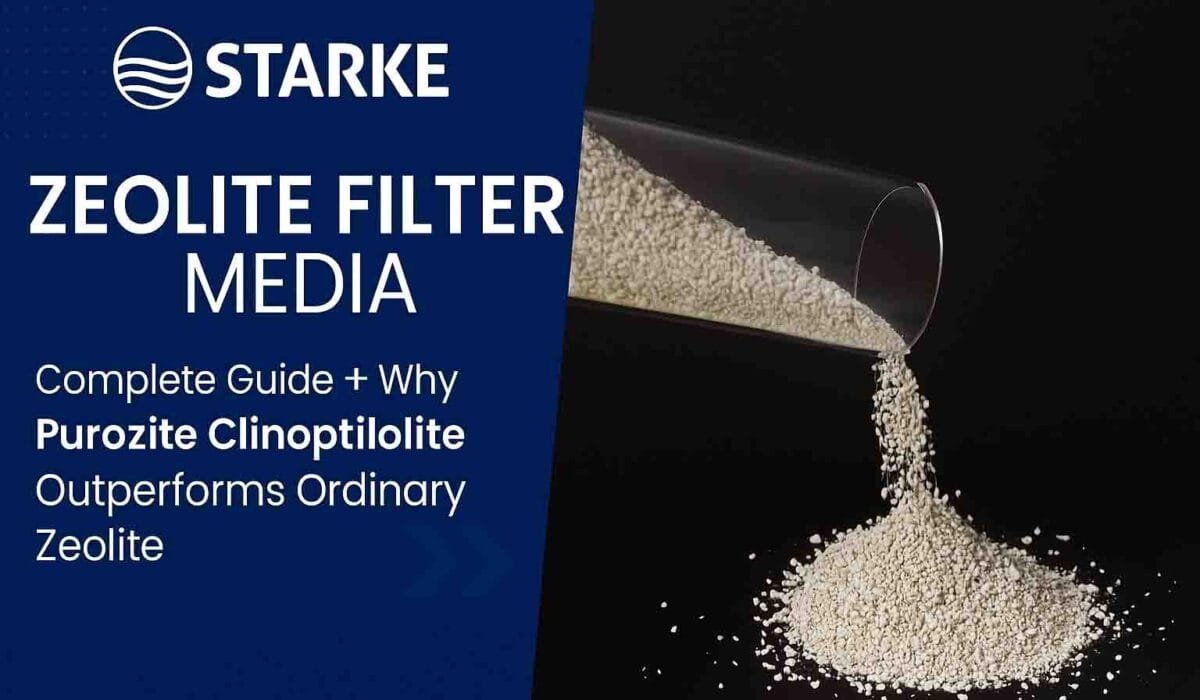
Zeolite filter media has become one of the most widely chosen filtration materials across water treatment, groundwater iron removal units, municipal systems, and swimming pool filtration systems. Its natural ion-exchange ability, high porosity, and micro-crystalline structure make it superior to traditional sand media in many applications.
Today, products like zeolite pool filter media, zeolite pool sand, zeolite filter sand, zeosand sand filter media, micro Z filter media, zelbrite pool filter media, and zeobest zeolite filter media are popular in the global market. But not all zeolite is the same.
This detailed guide explains:
✔ What zeolite filter media is
✔ How it works in different applications
✔ Where it is used — pools, iron removal, WTPs, industrial filtration
✔ The differences between common zeolite media and advanced engineered media
✔ Why Purozite Clinoptilolite from Starke delivers higher performance than ordinary zeolite
✔ How to select the best zeolite sand for pool filter or water treatment system
What Is Zeolite Filter Media?
Zeolite is a naturally occurring mineral belonging to the aluminosilicate family. It has a unique cage-like crystalline structure with a high internal surface area and the ability to trap ions through cation exchange.
This structure gives zeolite several beneficial properties:
Higher dirt-holding capacity
Filtration down to 2–4 microns
Natural ammonia removal
Natural color, odor, and organics removal
Lower backwash water consumption
Longer filter runs
This makes zeolite filter media a preferred choice over traditional silica sand in various applications.
Applications of Zeolite Filter Media
Zeolite is a versatile media used across multiple industries. Below is a complete overview.
1. Zeolite Filter Media for Swimming Pools
Pool owners and pool contractors increasingly prefer zeolite pool filter media due to:
Superior trapping of suspended solids
Ability to remove chloramines
Reduced backwashing
Crystal-clear water
Common pool-related zeolite keywords include:
zeolite pool filter
zeolite pool sand
zeosand sand filter media
zeo sand for pool filter
zeosand pool filter sand
zeolite pool media
zeolite pool sand replacement
zeolite pool filter sand
pool zeolite
zelbrite pool filter media
zeobest sand filter media
Traditional pool filters using silica sand filter 20–30 micron particles.
Zeolite filters down to <5 microns, giving visibly clearer water.
Performance Benefits in Pools
Reduction in turbidity
Less cloudy water after heavy usage
Improved circulation
Lower chlorine consumption
Enhanced removal of body oils, organics & sunscreen residues
For pool filtration, zeolite is one of the best alternatives to standard sand filter media.
2. Zeolite Media for Iron Removal
Natural clinoptilolite zeolite can remove:
Iron (Fe)
Manganese (Mn)
Ammonia (NH₃)
Hydrogen sulphide (H₂S)
Dissolved organics
Heavy metals
This makes it ideal for:
Groundwater filtration
Borewell treatment
Municipal iron removal plants
Industrial treatment processes
Keywords related to iron removal:
zeolite media for iron removal
zeolite filter media water treatment
zeolite filters
zeolite backwashing filter
Zeolite can be used as a standalone IR media or as a polishing layer on top of MnO₂ media.
3. General Water Treatment & Industrial Filtration
Zeolite is also widely used in:
Domestic & commercial WTPs
Effluent polishing
Color and odor removal
High TSS water polishing
Ammonia and nitrogen compound removal
Pre-treatment for RO
Aquarium and aquaculture filtration
Advanced zeolite types such as micro Z filter media, zeolite cartridge filter media, and media filter zeolite are marketed for these applications.
Zeolite vs Sand: What Makes Zeolite Superior?
| Parameter | Silica Sand | Zeolite Media |
|---|---|---|
| Filtration ability | 20–30 microns | 2–4 microns |
| Surface area | Low | Very high |
| Dirt holding | Low | 2–3× higher |
| Backwash water use | High | Up to 50% lower |
| Ammonia removal | None | Yes |
| Chloramine control | None | Yes |
| Turbidity clarity | Moderate | Crystal clear |
Zeolite is not just a replacement it is a performance upgrade.
Why Not All Zeolite Is the Same
This is where many buyers get confused.
There are:
Low-grade clinoptilolite zeolite
Zeosand
Zelbrite
Micro-Z
Zeobest sand
Zeolite pool sand sold in commodity markets
These products often differ in:
CEC (cation exchange capacity)
Purity levels
Hardness
Particle shape
Bulk density
Crushing strength
If you choose a lower-quality zeolite pool sand or zeolite filter sand, you may face:
Dust & fines
Faster media breakdown
Cloudy water
Reduced flow
Shorter lifespan
This is where Purozite stands out.
Purozite Clinoptilolite Zeolite – Why It Outperforms Ordinary Zeolite
Starke’s Purozite is a premium-grade, engineered clinoptilolite media designed for high-performance filtration across multiple applications.
It is not “just another zeosand” or “pool zeolite.” It is engineered.
1. Purity > 85% Clinoptilolite
Many zeolite pool sand products contain only 40–60% clinoptilolite.
Purozite contains 85–90% clinoptilolite, giving:
Higher ammonia removal
Higher ion-exchange efficiency
More consistent performance
2. Filtration <4 Microns
Ordinary zeolite and zeosand filter media typically trap 8–10 microns.
Purozite consistently filters below 4 microns under standard pool/water treatment conditions.
This gives:
Cleaner output
Less turbidity
Better polishing
Fewer backwashes
3. Very High Cation Exchange Capacity (Up to 190 meq/100g)
Low-grade zeolite = 80–120
Micro-Z = 125–150
Purozite = up to 190 meq/100g
This enhances:
Ammonia removal
Nitrogen control
Heavy metal capture
Organic removal
4. High Hardness (3 Mohs) & Low Breakage
Ordinary zeolite breaks down and becomes dusty.
Purozite’s balanced hardness ensures long filter life & stable particle shape.
5. High Bulk Density (850-900 kg/m³)
Most pool zeolite products have lower density (600–750 kg/m³), causing:
Bed lift issues
Low filtration pressure
Uneven backwashing
Purozite’s density ensures:
Stable bed
Efficient backwash
Longer operating cycles
6. Certified for Drinking Water Use (NSF 61)
Most zeosand / pool zeolite products are not certified for potable use.
Purozite is approved and suitable for:
Municipal WTPs
Iron removal plants
RO pretreatment
Domestic filtration systems
7. Multi-size Availability
Purozite is available in:
0.5–1 mm
0.7–1.6 mm
1.6–3 mm
3–5 mm
This allows Purozite to replace:
zeolite pool sand
zeolite sand for pool filter
micro Z filter media
zeosand filter media
zeolite cartridge filter products
Purozite vs. Other Popular Zeolite Products
1. Purozite vs Zeosand
Purozite provides:
Lower turbidity
Higher ammonia removal
Better particle strength
Less dust
2. Purozite vs Zelbrite
Zelbrite is widely used in pools, but Purozite offers:
Higher CEC
Better iron removal
Higher density
Longer life
3. Purozite vs Micro-Z
Micro-Z is used in water treatment plants but has:
Lower CEC
Higher breakdown
Limited size availability
Purozite offers:
Higher surface area
Higher removal efficiency
Broader applications
Where Purozite Is Used
✔ Swimming pools
✔ RO pre-treatment
✔ Drinking water
✔ Iron removal units
✔ Sewage polishing
✔ Desalination pre-filtration
✔ Aquaculture & aquariums
✔ Cooling towers
✔ Industrial ETP & STP polishing
Purozite is not just a product it’s a performance media.
How to Select the Right Zeolite Filter Media
To select the best media, evaluate:
1. CEC Value
Higher is better – Purozite has the highest.
2. Purity (%)
Clinoptilolite percentage defines performance.
3. Hardness
Ensures long-term performance.
4. Sizing & UC
Uniform size = uniform filtration.
5. Certifications
NSF 61 is essential for drinking water projects.
6. Application-Specific Size
Pools use 0.5–1.2 mm
WTPs use 0.7–1.6 mm
Polishing filters use 1.6–3 mm
Backwashing Zeolite: Best Practices
Backwash at: 25–50 m/h
Expansion: 20–30%
Frequency: once every 7–10 days (depends on load)
Zeolite backwashing filter systems require lower water than sand.
Conclusion: Why Purozite Is the Best Zeolite Filter Media to Choose
Whether you are searching for:
zeolite pool filter media
zeolite sand for pool filter
zeolite media for iron removal
zeosand sand filter media
micro Z filter media
zelbrite pool filter media
media filter zeolit
the performance difference between ordinary zeolite and premium engineered zeolite is massive.
Purozite Clinoptilolite is designed to outperform every ordinary zeolite variant in:
Micron filtration
Backwash efficiency
Ammonia removal
Turbidity control
Filtration throughput
Media life
Stability & physical strength
It is simply the most efficient zeolite media in the market for pools, drinking water, groundwater iron removal, RO pretreatment, ETP/STP polishing, and industrial applications.
If you require premium zeolite media for pools, drinking water, industrial projects, or iron removal, you can purchase Purozite from Starke in all standard sizes with global export support.
Website: https://www.starkefiltermedia.com/our-product/zeolite/