

Why Your Sand Filter is Not Working?
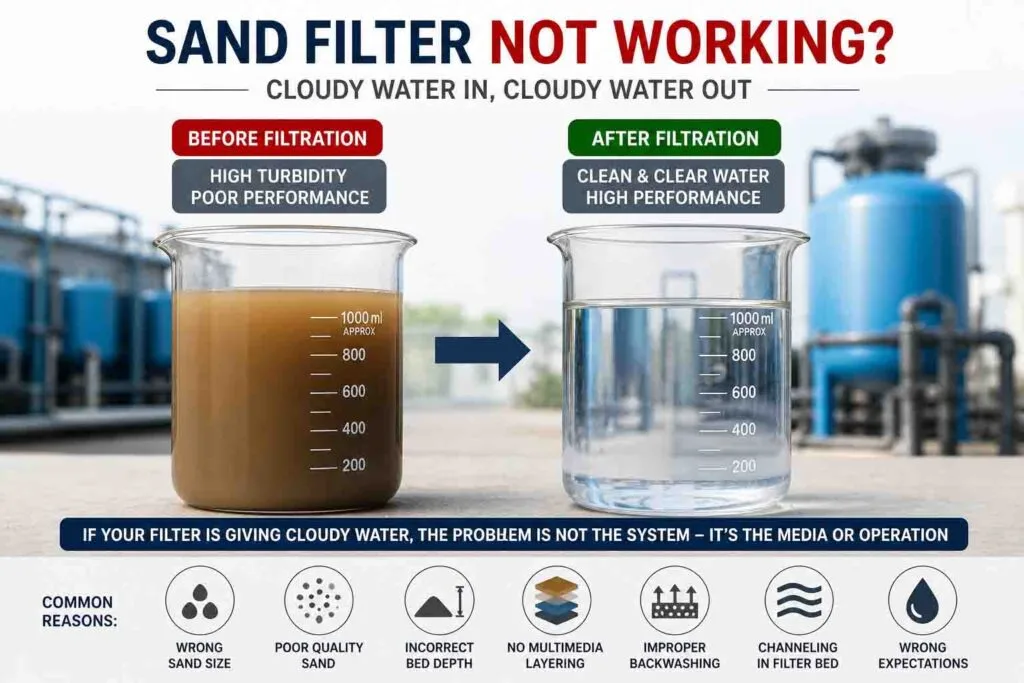
A sand filter is one of the most widely used systems in water treatment — yet many users complain:
- “Water is still cloudy”
- “TSS is not reducing”
- “Filter backwashing too frequently”
- “No improvement after filtration”
If your sand filter is not working, the problem is rarely the vessel it is usually the media, design, or operation.
In this blog, we break down 7 real industry problems and how to fix them.
⚠️ Problem #1: Wrong Sand Size (Most Common Issue)
What happens:
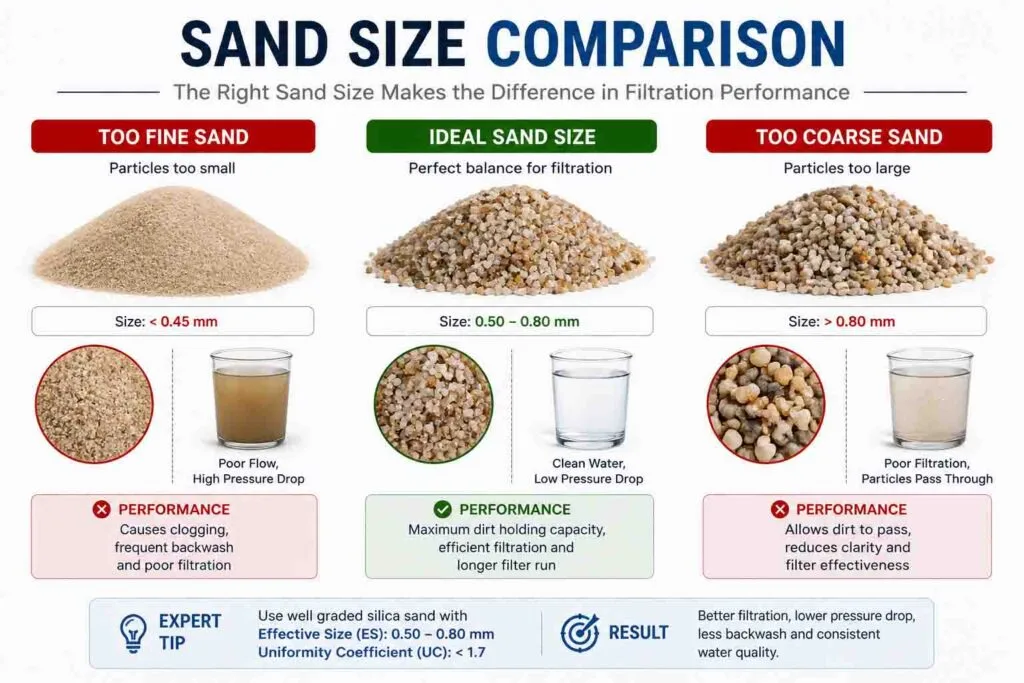
- Too coarse sand → particles pass through
- Too fine sand → choking + pressure drop
Ideal range:
- Effective Size (ES): 0.5 – 0.8 mm
- Uniformity Coefficient (UC): < 1.7
👉 If sizing is wrong, filtration will never perform properly
Solution:
- Check sieve analysis
- Ensure proper ES and UC
- Avoid mixed or ungraded sand
⚠️ Problem #2: Poor Quality Sand (High Silt & Dust)
What happens:
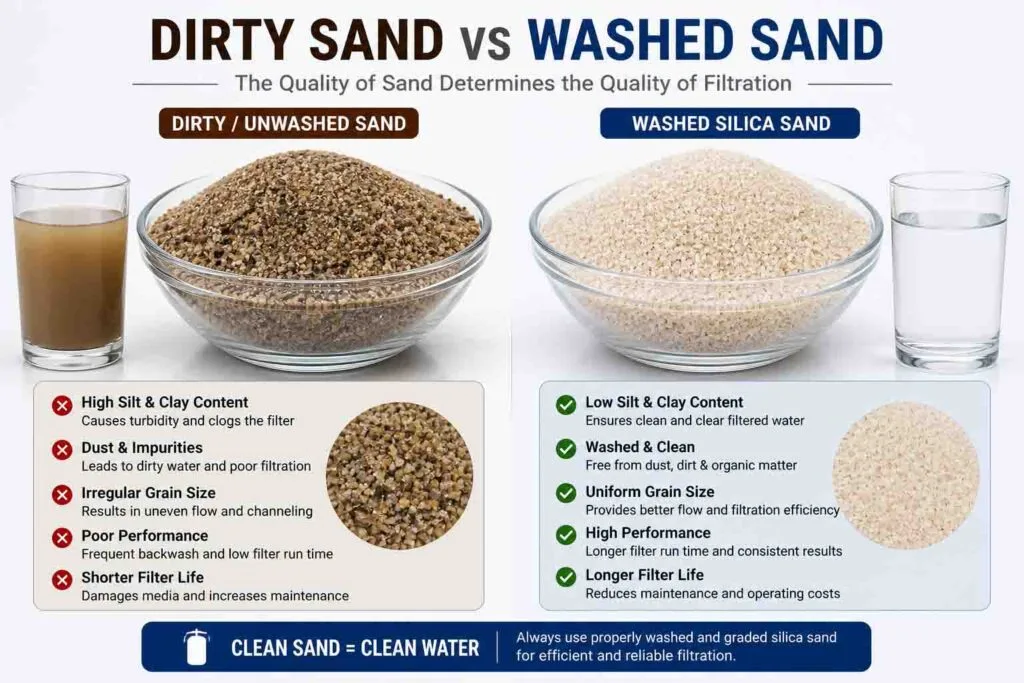
- Sand releases fines
- Water becomes more turbid after filtration
Signs:
- Yellow/brown water
- Muddy backwash
- Frequent clogging
Root cause:
- Unwashed sand
- Low silica purity
- High dust content
Solution:
- Use washed, graded silica sand
- Ensure SiO₂ > 96%
- Pre-rinse media before use
⚠️ Problem #3: Incorrect Media Bed Depth
What happens:
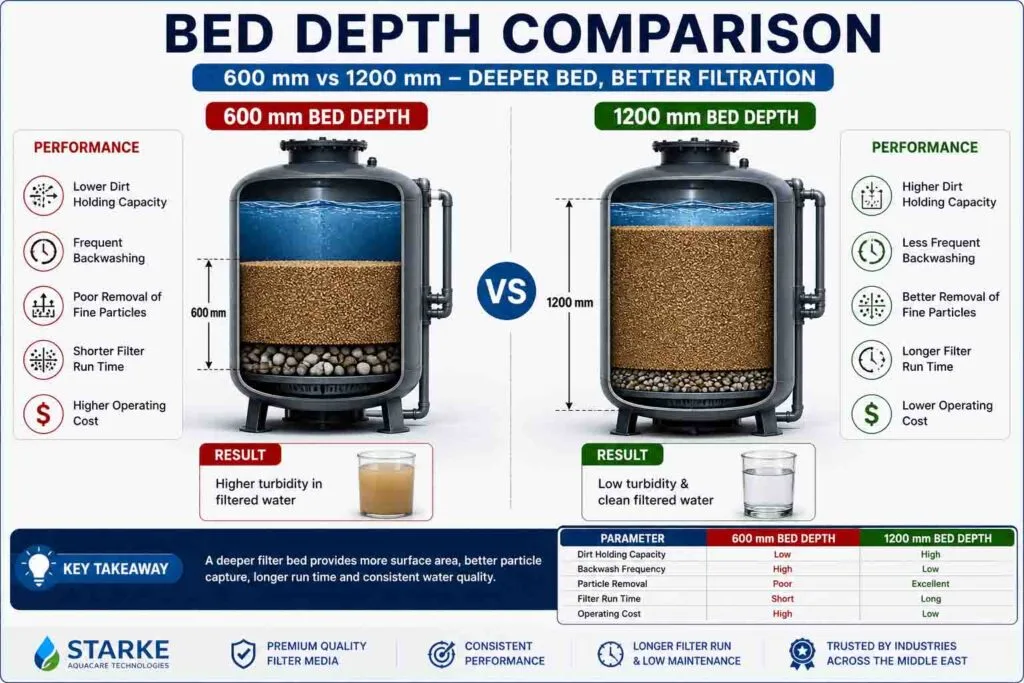
- Shallow bed → poor filtration
- Particles pass through
Reality:
Many systems operate with:
- 300–400 mm bed (WRONG)
Recommended:
- Minimum: 600 mm
- Better: 800–1200 mm
👉 Bed depth directly affects:
- Contact time
- Particle removal efficiency
Solution:
- Increase bed depth
- Use proper layer design
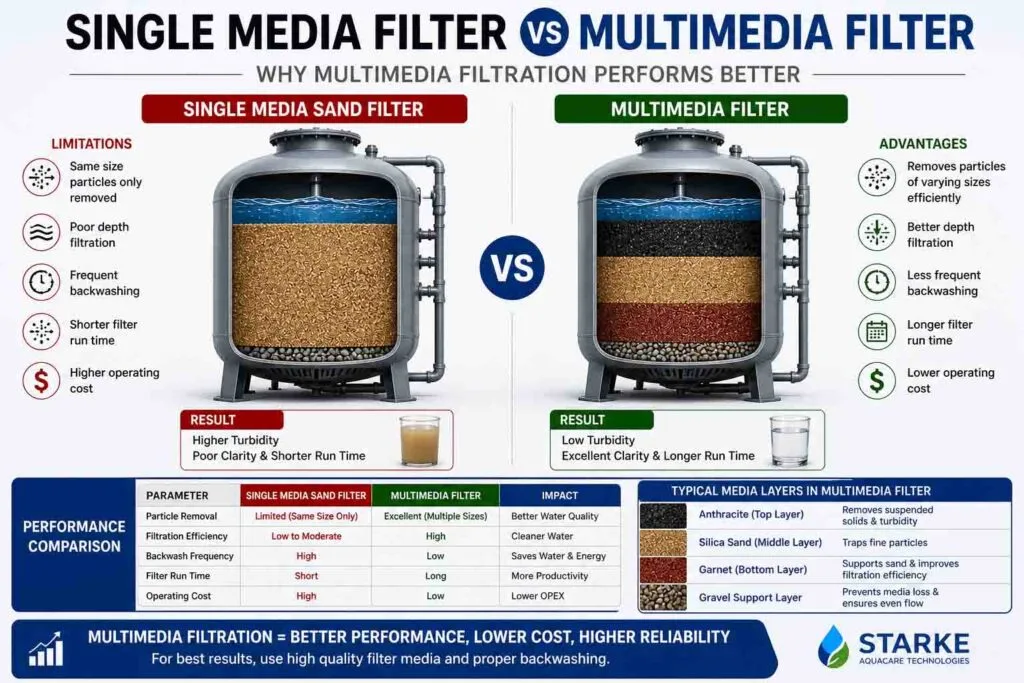
⚠️ Problem #4: No Multimedia Layering
What happens:
- Single sand layer struggles with fine particles
- Rapid clogging
Why:
Sand alone cannot:
- Handle varying particle sizes
- Maintain long filter cycles
Solution:
Use multimedia filtration:
- Top: Anthracite
- Middle: Sand
- Bottom: Garnet
👉 Improves:
- Filtration efficiency
- Run time
- Clarity
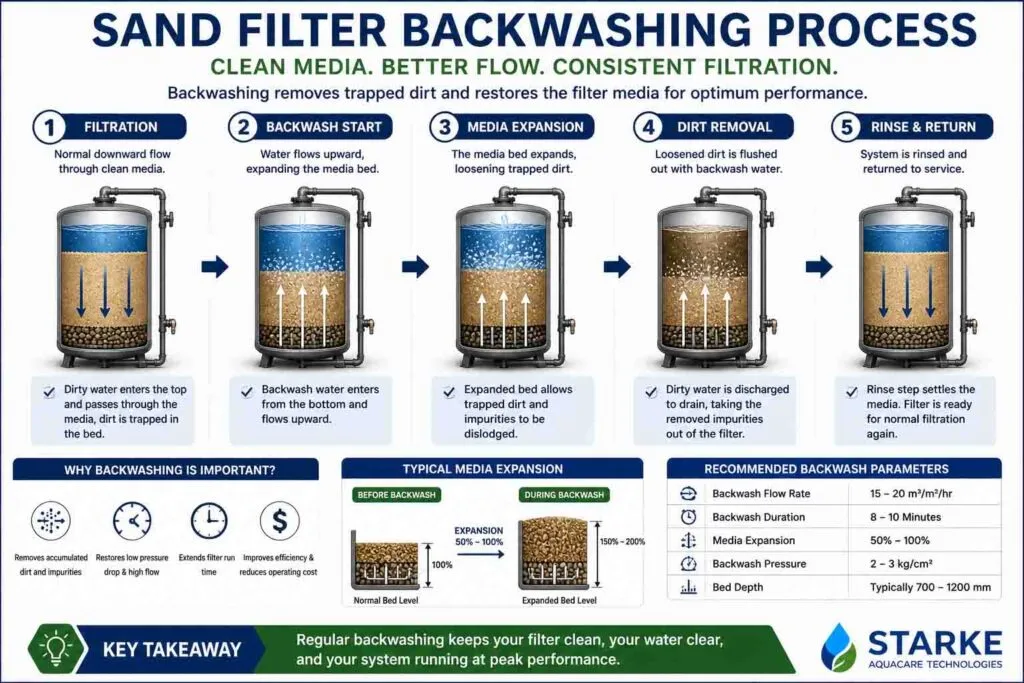
⚠️ Problem #5: Improper Backwashing
What happens:
- Media gets clogged
- Channeling starts
Common mistakes:
- Low backwash velocity
- Short backwash duration
Ideal:
- Expansion: 15–30%
- Flow: 15–25 m/h (sand)
Solution:
- Ensure proper backwash design
- Monitor bed expansion
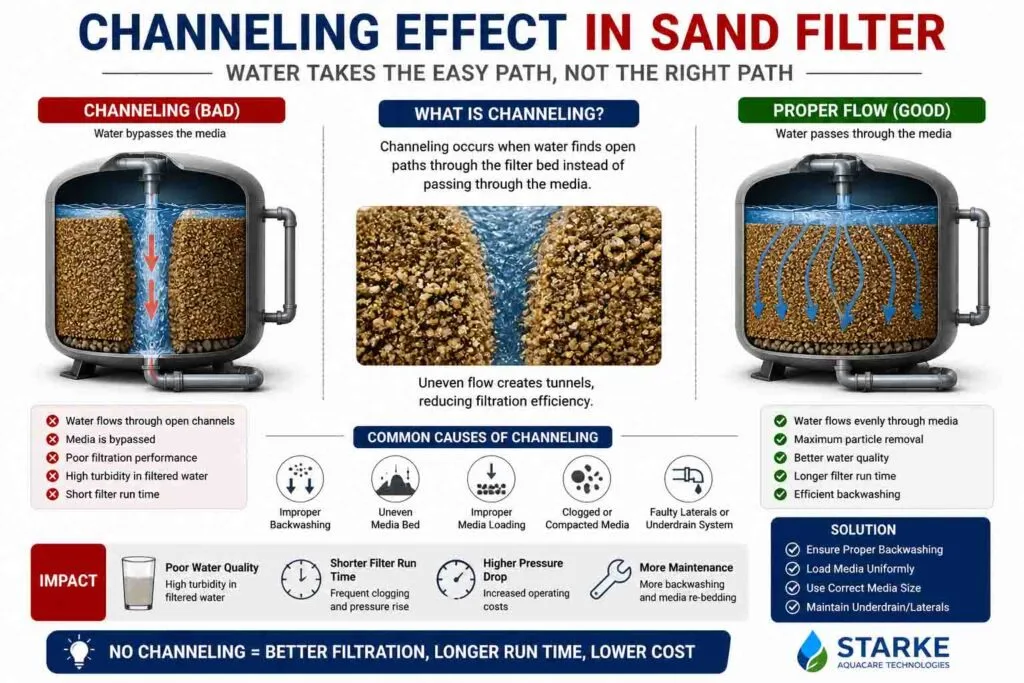
⚠️ Problem #6: Channeling in Filter Bed
What happens:
- Water bypasses media
- No filtration occurs
Causes:
- Improper backwash
- Uneven media loading
- Compacted bed
Signs:
- Sudden drop in filtration quality
- Uneven pressure
Solution:
- Re-bed media
- Ensure uniform loading
- Improve backwash
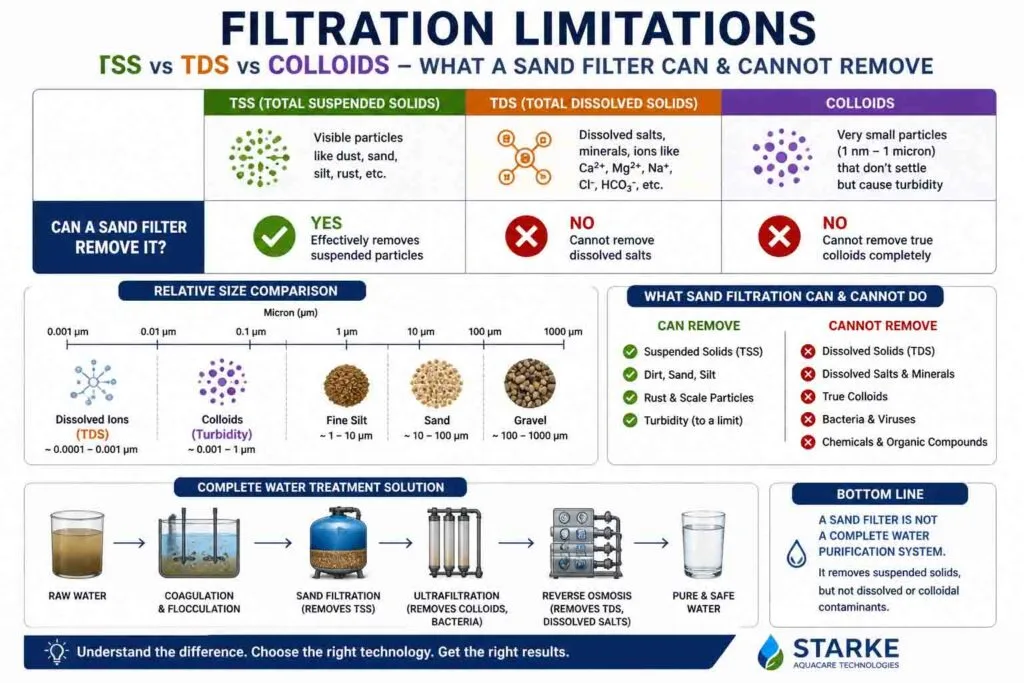
⚠️ Problem #7: Expecting Sand Filter to Remove Everything
Reality check:
A sand filter removes:
- Suspended solids (TSS)
- Turbidity
❌ It does NOT remove:
- Dissolved solids (TDS)
- True colloids
- Chemicals
Solution:
For advanced treatment:
- Coagulation → Filtration → UF/RO
👉 Wrong expectations = wrong results
Quick Diagnosis Table
| Problem | Symptom | Solution |
|---|---|---|
| Wrong sand size | Poor clarity | Correct ES & UC |
| Poor sand quality | Turbid output | Use washed silica |
| Low bed depth | Weak filtration | Increase to 600+ mm |
| No layering | Short cycles | Use multimedia |
| Bad backwash | Clogging | Optimize flow |
| Channeling | Sudden failure | Re-bed media |
| Wrong expectation | No improvement | Add treatment stages |
Real Industry Insight
In many projects, users blame:
- Filter design
- Pump
- System
But in reality:
👉 80% of filtration problems are due to media quality and selection

How to Fix Your Sand Filter Permanently
✔ Use graded silica sand
✔ Maintain correct bed depth
✔ Consider multimedia filtration
✔ Ensure proper backwashing
✔ Understand filtration limitations
Why Choosing the Right Media Matters
High-quality filter media ensures:
- Better turbidity removal
- Longer filter life
- Reduced backwashing
- Lower operating cost
📞 Need Expert Help?
If your sand filter is not working, it’s time to fix the root cause not just the symptoms.
👉 Contact Starke Aquacare Technologies
🌐 https://www.starkefiltermedia.com