
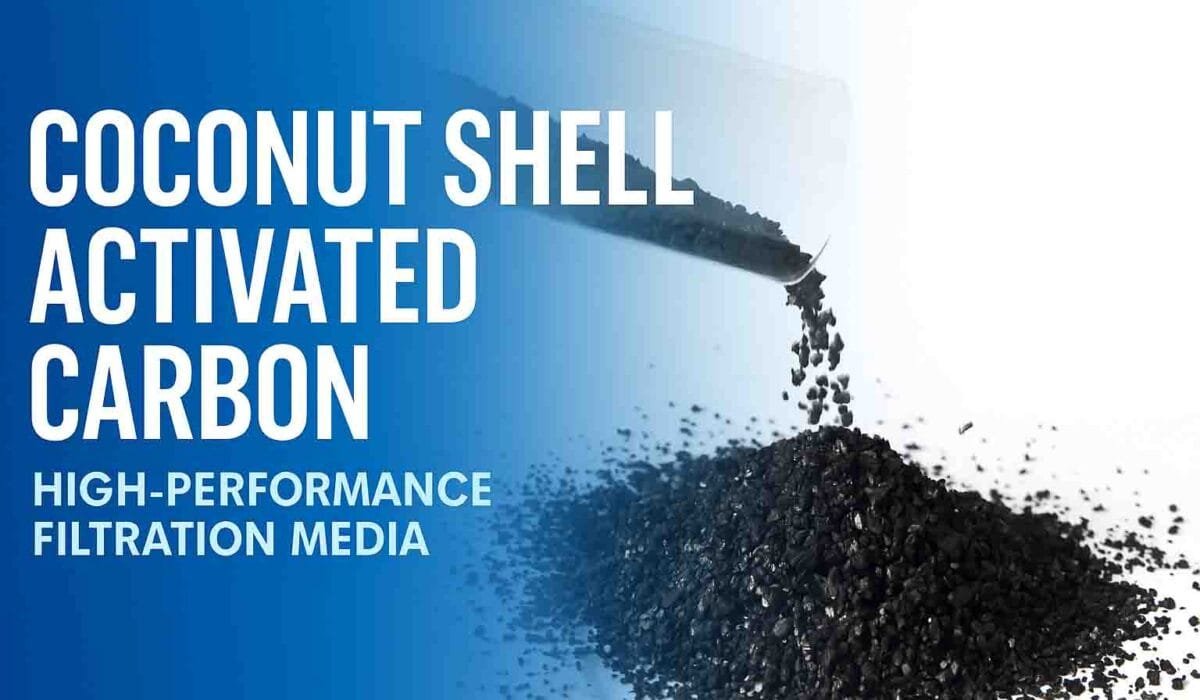
In the global water and air purification industry, coconut shell activated carbon has become the gold standard for adsorption efficiency, mechanical strength, and environmental sustainability. As filtration technologies evolve, industries are increasingly choosing coconut shell-based activated carbon over traditional coal or wood-based alternatives due to its microporous structure, high surface area, and superior contaminant removal performance.
This comprehensive article explains the production, properties, specifications, and industrial applications of coconut shell activated carbon, and why Starke Aquacare Technologies is one of the most trusted suppliers of this premium filtration media worldwide.
1. What Is Coconut Shell Activated Carbon?
Activated carbon (also called activated charcoal) is a form of processed carbon with a vast internal surface area and microporous structure that enables it to adsorb contaminants from liquids and gases. When derived from coconut shells, it becomes coconut shell activated carbon, a renewable, high-performance medium prized for its hardness and purity.
Coconut shells, a by-product of the coconut industry, are carbonized under controlled conditions and then activated either thermally (steam activation) or chemically to create a network of fine pores. The result is a highly adsorptive material used extensively in water filtration, air purification, industrial wastewater treatment, and chemical processing.
2. Production Process of Coconut Shell Activated Carbon
The production of coconut shell activated carbon involves several critical steps to achieve precise adsorption characteristics and physical strength.
a. Carbonization
Raw coconut shells are heated in an oxygen-deprived environment at 600°C to remove volatile organic matter. This produces coconut shell charcoal, which serves as the base for activation.
b. Activation
The carbonized material is activated at 800–1000°C using steam or carbon dioxide.
This step develops a large internal surface area (900–1200 m²/g) and micropore volume, ideal for adsorbing small organic molecules and chlorine compounds.
c. Screening and Grading
Activated carbon is sieved into precise mesh sizes such as 4×8, 6×12, 8×30, 12×40, and 20×50, suitable for various applications ranging from industrial gas treatment to municipal water purification.
d. Quality Testing
Final batches are tested for iodine number, hardness, ash content, moisture, and bulk density to ensure compliance with AWWA B600, ASTM, and EN standards.
3. Key Properties of Coconut Shell Activated Carbon
Coconut shell carbon is distinct from other base materials like coal or wood due to its microporous adsorption profile and mechanical robustness.
| Parameter | Typical Value | Significance |
|---|---|---|
| Iodine Number | 900–1100 mg/g | Measures adsorption capacity |
| Surface Area (BET) | >1000 m²/g | Indicates total available surface |
| Hardness | >95% | Resistance to attrition and dusting |
| Ash Content | <5% | Ensures chemical purity |
| Moisture | <3% | Prevents clumping during use |
| Bulk Density | 480–520 kg/m³ | Influences flow and pressure drop |
| pH | 8–10 | Slightly basic for water applications |
| Mesh Size | 4×8, 8×30, 12×40, 20×50 | Determines flow and contact time |
These properties make coconut shell activated carbon ideal for high-performance adsorption systems that demand both durability and chemical stability.
4. Types of Coconut Shell Activated Carbon
a. Granular Activated Carbon (GAC)
Particle sizes: 4×8, 8×30, 12×40, 20×50 mesh
Used in water filtration, air treatment, and gas purification
Features high flow rates and low pressure drop
Regenerable through steam or hot gas
b. Powdered Activated Carbon (PAC)
Particle size: <0.18 mm (80–325 mesh)
Used for batch treatment and decolorization in liquid-phase applications
Ideal for food, beverage, and pharmaceutical industries
c. Impregnated and Specialty Grades
Impregnated with Ag, Cu, or KOH for specific gas-phase or microbial control applications
Common in air filtration units, respirators, and VOC scrubbers
5. Applications of Coconut Shell Activated Carbon
Coconut shell activated carbon is used in a wide variety of industries and systems due to its versatile adsorption capacity and biocompatibility.
a. Water Treatment
Municipal Drinking Water Plants: Removes chlorine, taste, odor, and organic contaminants.
Industrial Water Filtration: Used in ETP/STP systems, RO pre-filtration, and dechlorination stages.
Desalination Plants: Acts as a pre-treatment layer for SWRO systems, protecting membranes from fouling.
b. Wastewater Treatment
Effective in removing phenols, detergents, pesticides, and color from effluents.
Widely used in textile, chemical, food & beverage, and pharmaceutical wastewater plants.
c. Air and Gas Purification
Removes VOCs, H₂S, SO₂, NOx, and odor compounds from air streams.
Used in biogas treatment, industrial exhaust systems, and carbon filters for HVAC units.
d. Food and Beverage Industry
Used for sugar decolorization, edible oil refining, alcohol purification, and beverage filtration.
Food-grade carbon with low ash (<5%) and neutral pH ensures purity and safety.
e. Gold Recovery and Chemical Processes
Utilized in CIP (Carbon-in-Pulp) and CIL (Carbon-in-Leach) processes due to its hardness and adsorption strength.
Excellent resistance to chemical degradation in refinery and process industries.
f. Pharmaceutical and Medical Uses
Applied in air masks, respirators, and medical-grade filters for adsorption of organic vapors and gases.
6. Advantages of Coconut Shell Activated Carbon Over Other Base Materials
| Parameter | Coconut Shell | Coal-Based | Wood-Based |
|---|---|---|---|
| Pore Type | Microporous | Mesoporous | Macroporous |
| Surface Area | 1000–1200 m²/g | 600–800 m²/g | 400–700 m²/g |
| Hardness | Very High | Moderate | Low |
| Dust Formation | Minimal | Medium | High |
| Regenerability | Excellent | Moderate | Poor |
| Renewable Source | ✅ Yes | ❌ No | ✅ Yes |
| Ash Content | Low (<5%) | Moderate (8–12%) | High (15–20%) |
| Best Application | Water & Gas Filtration | Industrial Air Cleaning | Decolorization |
Coconut shell activated carbon combines the strength of coal and the renewability of wood, making it the most balanced and sustainable choice for high-precision filtration systems.
7. Key Specifications and Testing Parameters
Starke’s Coconut Shell Activated Carbon is tested for the following parameters before dispatch:
Iodine Number: 900–1100 mg/g
Hardness: ≥95%
Ash Content: ≤5%
Moisture Content: ≤3%
pH Value: 8–10
Apparent Density: 480–520 kg/m³
Particle Size Distribution: As per ASTM or customer specification
Adsorption Rate: Tested using Methylene Blue and Phenol Index
Compliance: AWWA B600, EN 12915, NSF, and ISO 9001 standards
These stringent quality checks ensure consistent performance and reliability in industrial filtration systems worldwide.
8. Packaging and Export Availability
Starke supplies coconut shell activated carbon in:
25 kg HDPE laminated bags
500 kg and 1000 kg jumbo bags (palletized on request)
Moisture-proof vacuum-sealed bags for pharmaceutical and food-grade carbon
Each package includes a batch number, COA, and MSDS, ensuring full traceability and export compliance.
Shipping is handled via 20-ft or 40-ft containers, optimized for maximum volume utilization and protection from contamination.
9. Technical Applications Across Industries
| Industry | Application | Carbon Type / Mesh Size |
|---|---|---|
| Water & Wastewater | Chlorine & Odor Removal | GAC 8×30, 12×40 |
| RO & Desalination | Pre-Filtration | GAC 12×40 |
| Food & Beverage | Decolorization & Deodorization | PAC 200 mesh |
| Gold Recovery | Carbon-in-Pulp (CIP/CIL) | GAC 6×12 |
| Biogas | H₂S Removal | Impregnated Carbon |
| Air Purification | VOC Removal | GAC 4×8 |
| Pharmaceutical | Adsorption of Vapors | PAC 325 mesh |
| Chemical Refining | Solvent Recovery | GAC 8×30 |
10. Maintenance, Regeneration, and Lifespan
Granular coconut shell activated carbon can be thermally regenerated 4–5 times depending on fouling load.
Backwashing is recommended for water filters every 15–20 days to remove trapped solids.
Activated carbon replacement cycle: 12–18 months for water systems, 6–12 months for air purification.
PAC grades are non-regenerable and replaced after each adsorption cycle.
Proper handling and periodic analysis of iodine number and pressure drop help determine replacement timing.
11. Sustainability and Environmental Impact
Coconut shell activated carbon is a renewable, biodegradable, and eco-friendly product derived from waste shells of the coconut industry.
Unlike coal-based carbons, it:
Has lower CO₂ emissions during production.
Supports agro-waste utilization and circular economy goals.
Offers a non-toxic disposal pathway after service life.
By choosing coconut shell activated carbon, industries contribute to sustainable resource use while ensuring operational efficiency.
12. Why Choose Starke Aquacare Technologies
Starke Aquacare Technologies has been a trusted name in filtration and purification media since 2005. With strong technical expertise and a global client base across Middle East, Africa, Europe, and Asia-Pacific, Starke delivers consistent quality and performance.
Starke Advantages:
ISO 9001 and AWWA-compliant production
Controlled activation for uniform micropore distribution
Custom mesh sizes and adsorption capacity on request
Dedicated packaging for export and OEM projects
Technical support and after-sales service for system optimization
Clients in water treatment, beverage production, and chemical industries rely on Starke for timely supply and technical reliability.
13. Summary of Key Benefits
✅ High adsorption efficiency (iodine 1000 mg/g)
✅ Renewable and sustainable raw material
✅ High hardness and low dust formation
✅ Superior chlorine, odor, and VOC removal
✅ Suitable for water, air, and gas purification systems
✅ Certified as per AWWA B600 / EN 12915 / ISO 9001
✅ Available in both GAC and PAC forms
14. Conclusion
Coconut Shell Activated Carbon is an indispensable filtration media for industries that demand clean, odor-free, and contaminant-free water or air. Its combination of microporosity, durability, and renewability makes it the most efficient and sustainable activated carbon type available today.
From drinking water treatment plants to industrial air scrubbers, and from food-grade purification to gold recovery, coconut shell activated carbon continues to redefine performance benchmarks.
For industrial and municipal applications, Starke Aquacare Technologies supplies high-quality granular coconut shell activated carbon in multiple mesh sizes and grades, compliant with AWWA, EN, and ISO standards.