
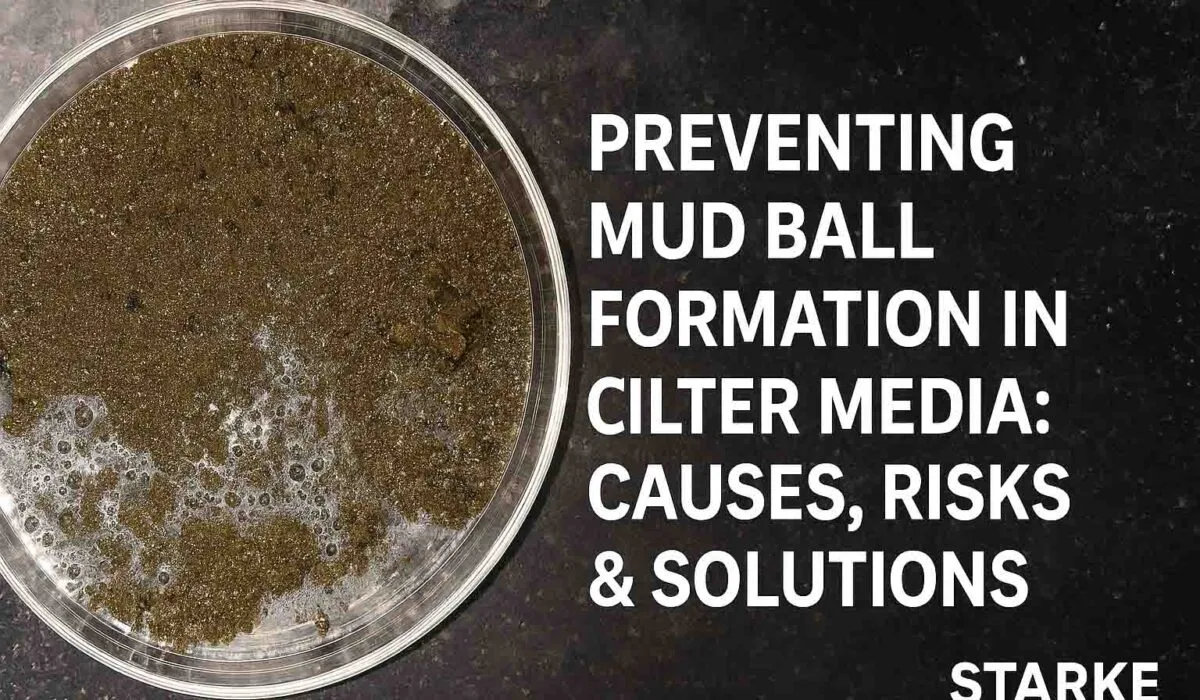
How to Prevent Mud Ball Formation in Filter Media: A Complete Guide by Starke
Clean and efficient filtration is the backbone of any water treatment system. However, one of the most common and often overlooked issues is mud ball formation in filter media. These sticky, compacted balls of fine particles, clay, and organic matter can drastically reduce filter performance, increase backwash frequency, and shorten the life of your media bed.
In this guide, Starke Filter Media, a global supplier of high-performance filtration media, explains the root causes of mud balls, how to identify them, and most importantly—how to prevent them effectively.
What Are Mud Balls in Water Filters?
Mud balls are dense, sticky clumps formed by the accumulation of fine particles, organic debris, and biofilms that fail to get dislodged during backwash cycles. Over time, these balls grow in size and harden, damaging the media bed and causing uneven flow distribution.
Why Mud Ball Formation is a Serious Problem
Reduces Filtration Efficiency – Leads to poor turbidity and TSS removal.
Increases Pressure Drop – Restricts water flow and causes energy loss.
Blocks Even Flow Distribution – Causes channeling and untreated water breakthrough.
Requires Costly Media Replacement – Frequent clogging reduces media lifespan.
Common Causes of Mud Ball Formation in Filter Media
| Cause | Description |
|---|---|
| Inadequate Backwashing | Low flow rate or short duration fails to clean the media. |
| High TSS or Turbidity | Suspended solids settle in the bed and bind particles together. |
| Organic Contamination | Bacteria, slime, and biofilm contribute to sticky buildup. |
| Improper Filter Design | Poor distribution system can promote channeling and dead zones. |
| Delayed Maintenance | Skipping backwash cycles or inspections worsens accumulation. |
How to Prevent Mud Ball Formation in Filter Media
✅ 1. Optimize Your Backwash Cycle
Backwash every 48–72 hours or as needed based on pressure drop.
Use correct backwash flow rates:
Sand: 15–20 m³/hr/m²
Purozite™ / Zeolite: 30–35 m³/hr/m²
Manganese Dioxide (MnO₂): 25–30 m³/hr/m²
Always ensure backwash lasts 10–15 minutes or until the drain water runs clear.
✅ 2. Use Air Scour Before Backwash
Air scour dislodges sticky mud layers before hydraulic cleaning.
Recommended rate: 60–80 m³/hr/m² for 3–5 minutes.
✅ 3. Monitor Raw Water Quality
Turbidity: < 5 NTU
TSS: < 50 mg/L
Avoid letting organic matter and silt overload the filter.
✅ 4. Periodically Disinfect the Media
Use 5–10 ppm chlorine shock dosing once a month.
For manganese-based filters, use potassium permanganate to oxidize and clean the media.
✅ 5. Inspect and Maintain Your Filter Bed
Check media depth and replace if reduced.
Look for clumps, odours, slime, or discoloration in media.
Top up media annually for optimal performance.
Filter Media Inspection Checklist
| Task | Frequency |
|---|---|
| Check Pressure Drop | Weekly |
| Backwash Clarity Check | After every backwash |
| Visual Media Inspection | Monthly |
| Air Scour Test (if applicable) | Monthly |
| Bed Depth Measurement | Quarterly |
| Influent Water Quality Check | Monthly |
| Disinfection or Shock Dosing | Monthly |
| Drain Sample Testing | Quarterly |
Recommended Filter Media for Cleaner Operation
Starke offers a wide range of certified and clean filter media:
Purozite™ Zeolite – Low backwash frequency, <4 micron filtration.
Starmnox Manganese Dioxide – Effective for iron and manganese removal.
Silica Sand & Garnet – Graded and pre-washed for optimal performance.
All our media is pre-cleaned, sieved, and tested for Uniformity Coefficient (UC) compliance as per AWWA B100 and IS standards.
Need Help Solving Filter Maintenance Issues?
Starke Filter Media has been trusted by water treatment companies in over 25 countries for high-quality filter solutions and expert guidance. If you’re experiencing mud ball formation or poor backwash efficiency, our technical team is ready to help.
📧 Contact us at: info@starkefiltermedia.com
🌐 Visit: www.starkefiltermedia.com
Conclusion
Mud ball formation in filter media can silently destroy filtration efficiency, increase costs, and disrupt operations. By following the right maintenance practices and choosing reliable media like Purozite™, Starmnox, or graded silica sand, you can ensure consistent, clean, and trouble-free filtration.
Stay ahead of the problem inspect, backwash, and monitor regularly.