How to Increase the Life of Filter Media: 12 Proven Ways to Maximize Performance
Filter media is the heart of every water filtration system. Whether you are using silica sand, anthracite, activated carbon, garnet, or a multimedia combination, its performance directly affects water quality, operating costs, and plant reliability.
Many operators assume filter media should be replaced whenever filtration performance declines. In reality, premature media replacement is often caused by operational issues rather than the media itself. With proper design, operation, and maintenance, high-quality filter media can provide reliable performance for many years.
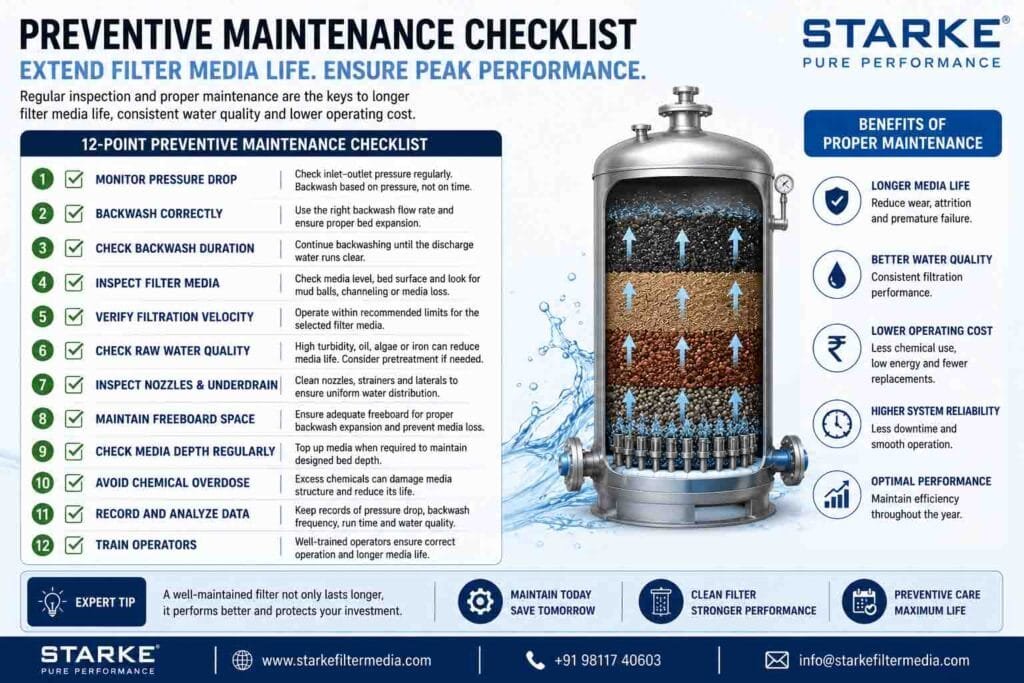
Here are twelve practical ways to maximize the service life of your filter media.
1. Select the Right Filter Media
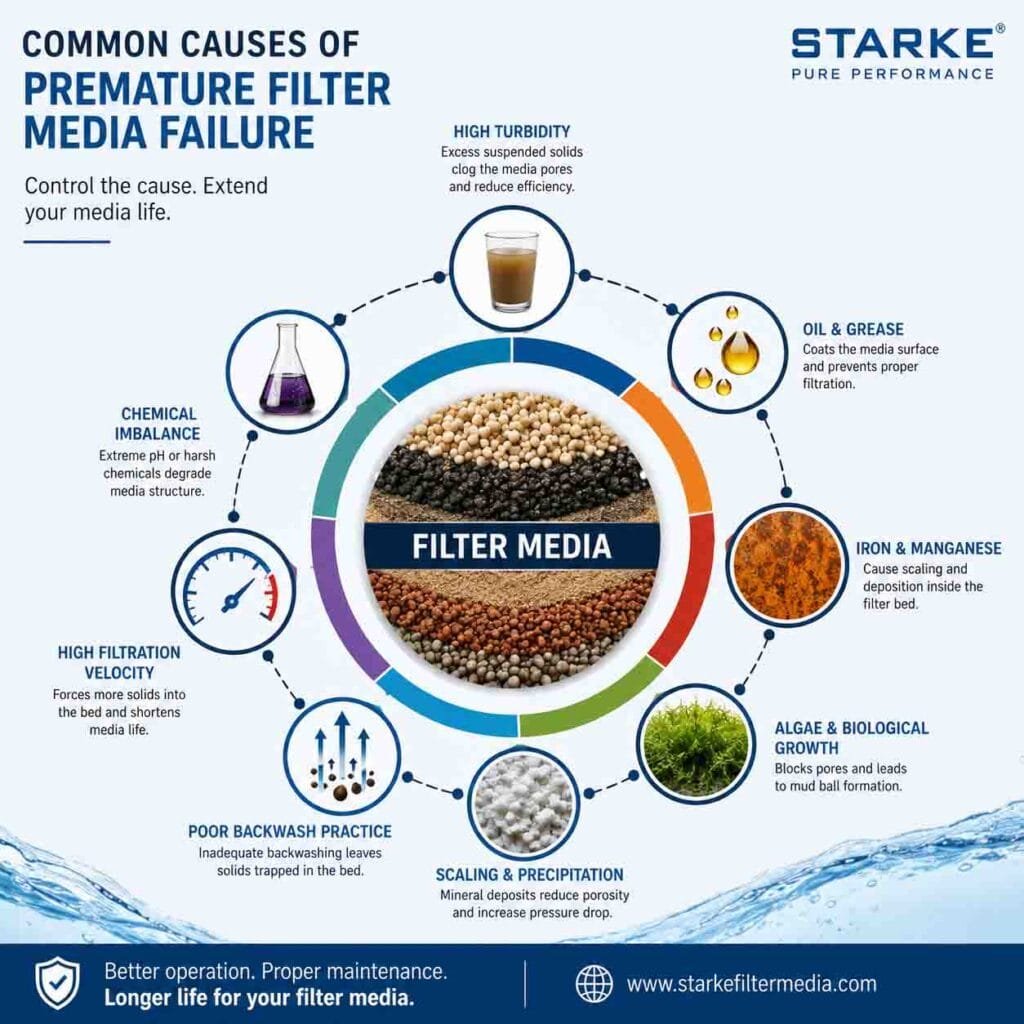
The first step is choosing media that matches your application. Factors such as particle size, effective size (ES), uniformity coefficient (UC), specific gravity, and chemical resistance all influence long-term performance. Using media that is unsuitable for the water quality or filtration process can lead to rapid fouling and reduced efficiency.
2. Maintain the Correct Backwash Flow Rate
Backwashing removes trapped solids from the filter bed. If the backwash flow is too low, contaminants remain trapped inside the media, leading to mud balls, channeling, and increasing pressure loss. If the flow is too high, media particles can be damaged or washed out of the vessel.
Backwash flow should always be based on the filter media type, particle size, and water temperature.

3. Backwash at the Right Time
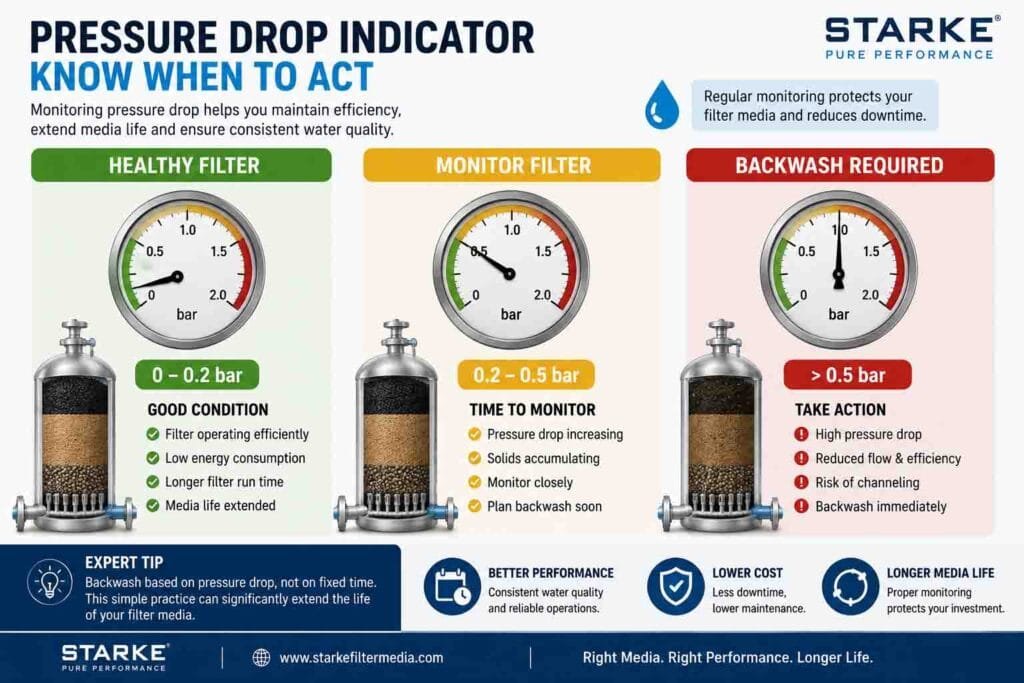
Waiting too long before backwashing allows solids to compact within the filter bed. Excessive accumulation increases head loss and makes cleaning less effective. Instead of following a fixed schedule, backwash should be initiated based on pressure differential, flow reduction, or water quality.
4. Prevent Mud Ball Formation
Mud balls develop when organic matter, suspended solids, and biological growth accumulate inside the media bed. They reduce filtration efficiency and create preferential flow paths. Proper backwashing, periodic inspections, and maintaining adequate disinfectant levels help prevent their formation.
5. Control Raw Water Quality
High levels of suspended solids, algae, oil, grease, or iron can overload the filter media. Where raw water quality is poor, pretreatment processes such as coagulation, clarification, or sedimentation should be considered to reduce the load on the filter.
6. Monitor Pressure Drop
A gradual increase in pressure differential across the filter often indicates fouling or inadequate cleaning. Regular monitoring allows operators to identify problems before they affect filtration performance or shorten media life.
7. Avoid Excessive Filtration Velocity
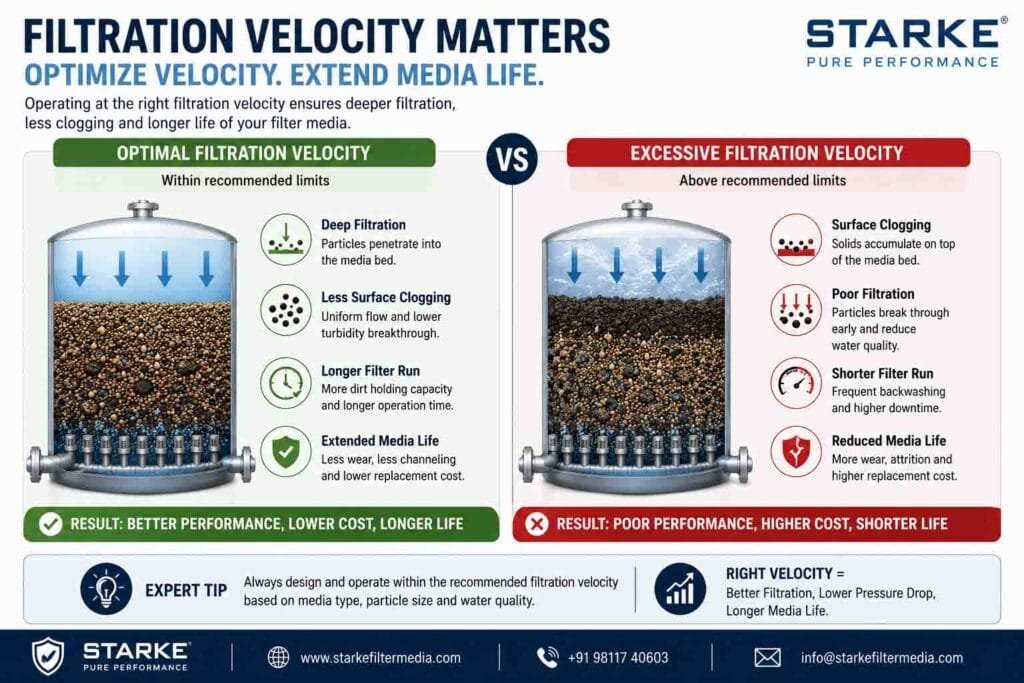
Operating above the recommended filtration rate forces more contaminants into the filter bed and reduces contact time. This increases wear on the media and shortens filter run times. Maintaining the recommended filtration velocity improves both efficiency and media longevity.
8. Use High-Quality Filter Media
Consistent particle size distribution, low fines content, and proper grading contribute to better hydraulic performance and reduced attrition. High-quality media also expands more uniformly during backwashing, improving cleaning efficiency over its service life.
9. Inspect the Filter Bed Regularly
Periodic inspection of the filter bed can reveal media loss, uneven surfaces, channeling, scaling, or biological fouling. Identifying these issues early allows corrective action before significant damage occurs.
10. Protect the Underdrain System
A damaged or partially blocked underdrain can create uneven flow distribution, preventing proper backwashing. Routine inspection of nozzles, strainers, and laterals helps maintain uniform hydraulic performance throughout the filter.
11. Replace Only the Lost Media
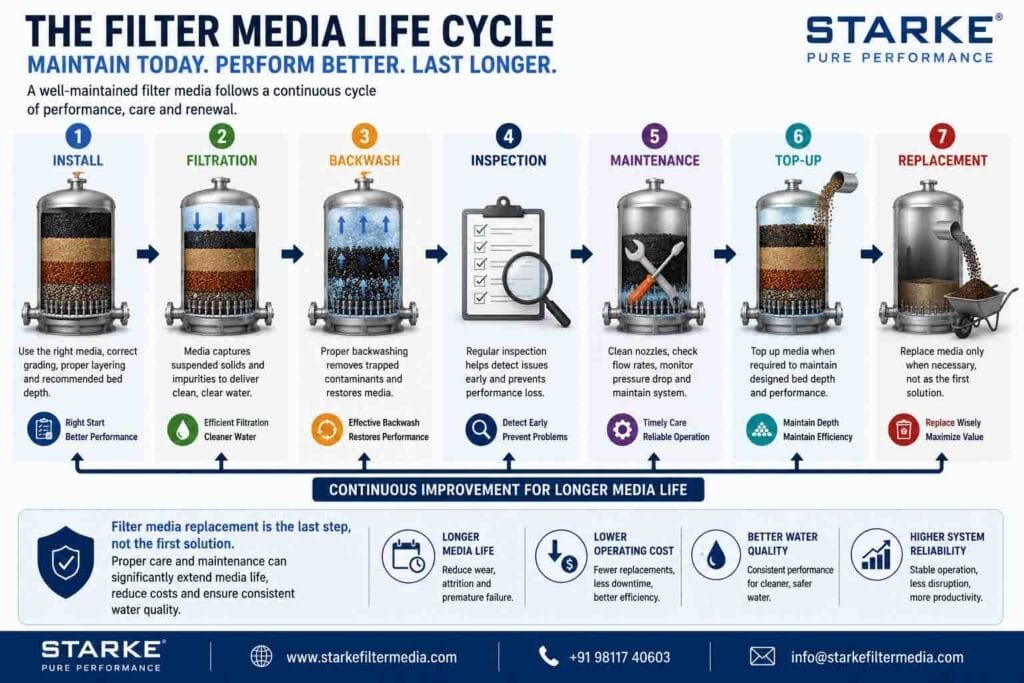
Not every filter requires complete media replacement. In many cases, only the upper portion of the bed has experienced attrition or media loss. Topping up the filter with matching media can restore bed depth and extend the overall service life.
12. Follow a Preventive Maintenance Program
Regular monitoring of filtration performance, pressure drop, backwash efficiency, media depth, and water quality helps prevent unexpected failures. Preventive maintenance is often far more economical than frequent media replacement.
Signs That Filter Media May Need Attention
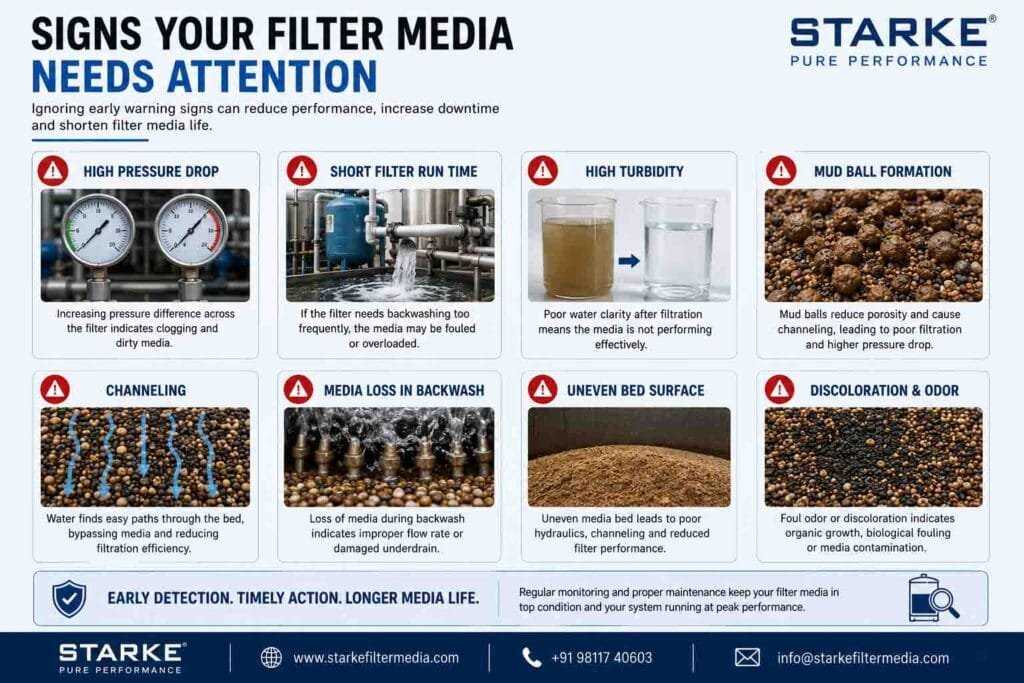
Watch for these common warning signs:
- Reduced filter run time
- Increasing pressure drop
- Higher treated water turbidity
- Frequent backwashing
- Mud ball formation
- Channeling
- Media carryover during backwashing
- Uneven filter bed surface
These symptoms should be investigated promptly to determine whether operational adjustments or maintenance are required.
Conclusion
The life of filter media depends on much more than its material composition. Proper media selection, correct backwashing, appropriate filtration velocity, regular inspections, and good operational practices all contribute to long-term performance.
By focusing on preventive maintenance rather than reactive replacement, water treatment plants can reduce operating costs, improve filtration efficiency, and maximize the value of their filter media investment.
A well-maintained filter bed not only lasts longer but also delivers more consistent water quality, lower maintenance requirements, and greater system reliability over its entire service life.